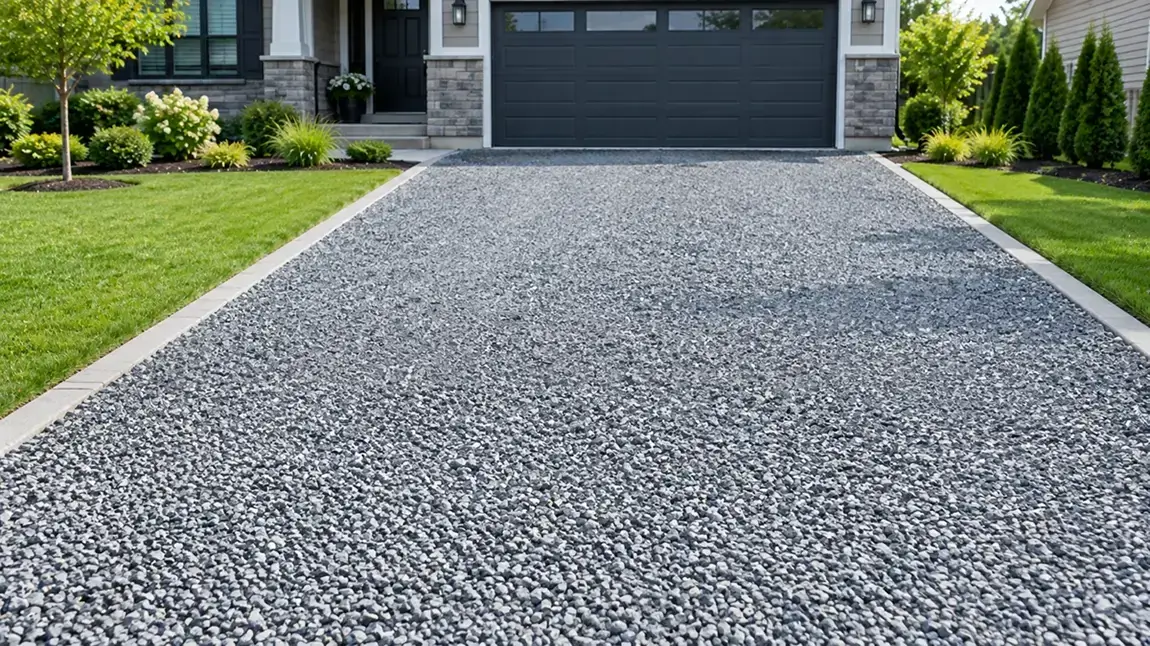
The best gravel for a driveway is angular crushed stone, laid in layers. Large stone such as #3 goes at the bottom for a strong base, #57 stone goes in the middle, and a top layer of crusher run or #411 packs down into a firm, smooth surface. If you only want one type, crusher run is the best all-round choice, because its mix of stone and fine dust locks together when it’s compacted.
Round stones like pea gravel and river rock look nice, but they roll under tires and make a loose, rutted driveway. This guide covers the best driveway gravel types, the sizes and what they mean, how deep each layer should be, and which gravel to avoid.
Why angular stone works best
Crushed stone has sharp, broken faces. When it’s compacted, the edges lock against each other and the layer stays put under the weight of a car. Round stone has smooth sides that slide past each other, so it moves every time a tire turns on it.
The fine dust in some gravels matters too. Crusher run and #411 contain stone dust that fills the gaps between larger pieces. When it’s wet and compacted, it hardens into a surface that is firm enough to drive on and sheds rain. Clean, washed gravel has no fines, so it drains well but never packs as firmly.
Best driveway gravel types
| Gravel | Size | Best use in a driveway |
|---|---|---|
| #3 stone | About 1½ to 2 in | Bottom layer. Spreads the load and lets water drain. |
| #57 stone | About ¾ to 1 in | Middle layer, or the top layer where you want good drainage. |
| #411 | #57 stone mixed with stone dust | Top layer. Packs down firm and smooth. |
| Crusher run | About ¾ in down to dust | Base or top layer. The best single-gravel driveway. |
| Crushed limestone | Several grades | Very common in the East and Midwest. Packs well and is easy to find. |
| Crushed concrete | Similar to crusher run | A cheaper, recycled option for base layers. |
| Pea gravel | About ⅜ in, round | Not recommended for driving. Better for paths and patios. |
| River rock | 1 to 3 in, round | Not recommended for driving. Use it for edges and borders. |
Names change by region. Crusher run is also called crush and run, dense grade aggregate, road base or quarry process, and in Minnesota and nearby states, a similar mix is sold as Class 5. Ask your supplier for “crushed stone with fines” if you’re not sure what they call it.
Gravel sizes explained
Gravel numbers come from standard aggregate sizes used by quarries and road builders. As a rule, a lower number means bigger stone.
| Size | Approximate stone size | Common uses |
|---|---|---|
| #1 | 2 to 4 in | Base on very soft or wet ground, construction entrances |
| #3 | 1½ to 2 in | Driveway base, drainage |
| #57 | ¾ to 1 in | Driveway middle layer, drainage, behind walls |
| #67 | ¾ in and smaller | Driveway top layer, under pavers and slabs |
| #8 | ⅜ to ½ in | Top dressing, paths |
| #10 (screenings) | ¼ in down to dust | Binding the top layer, under pavers |
Exact sizes vary a little between quarries, so look at a sample or a photo before you order a truckload.
Gravel driveway layers and depth
A gravel driveway lasts much longer when it’s built in layers, each compacted before the next goes on. A typical driveway for cars is 8 to 12 inches deep in total:
- Base layer: 4 to 6 inches of #3 stone or crusher run on compacted soil. Use the deeper end on clay or soft ground.
- Middle layer: about 4 inches of #57 stone.
- Top layer: 2 to 4 inches of crusher run, #411 or #67 stone, compacted firm.
A layer of woven geotextile fabric under the base helps stop stone from sinking into soft soil, and it’s worth it on clay. Crown the driveway slightly, higher in the middle than at the edges, so rain runs off instead of making potholes.
The gravel driveway calculator works out the tons and cubic yards for each layer, using the weight of each stone type.
Gravel to avoid for a driveway
- Pea gravel. Small and round, so it rolls and spreads under tires and leaves ruts. It’s fine as a thin decorative top on a well-built base for light use, but not as the main driveway stone.
- River rock. Smooth and round like pea gravel, and uncomfortable to walk on. Use it for borders and drainage strips instead.
- Clean stone alone. Stone without fines, such as #57 on its own, drains well but stays loose on top. Add a top layer with fines.
- Soft stone on its own. Some soft stone, such as certain sandstones, breaks down into dust and mud over time. Ask your supplier which local stone holds up best under traffic.
How much gravel do you need?
Gravel is sold by the ton or by the cubic yard. For a 50 × 12 ft driveway with 4 inches of #3 stone, 4 inches of #57 stone and 3 inches of #411 on top, you need about 32 tons of gravel in total, with extra for compaction. That’s roughly 11 tons of #3, 11.5 tons of #57 and 9 tons of #411.
For a single layer, the crushed stone calculator gives tons and cubic yards for any stone grade. For the whole driveway, use the gravel driveway calculator above and enter your own layers.
Cheapest gravel for a driveway
Crusher run and crushed concrete are usually the cheapest gravels that still make a good driveway, because they’re used in large amounts for roads and building sites. Decorative stone costs more. Prices vary a lot by region and by how far the truck has to travel, and delivery can be a large part of the bill, so get a quote that includes delivery. Enter your supplier’s price per ton in the gravel calculator to see the cost for your area.
Keeping a gravel driveway in good shape
- Rake loose stone back into ruts and low spots a few times a year.
- Add a thin layer of fresh top stone every few years as the surface wears down.
- Keep water moving off the driveway with a crown and side ditches. Standing water is what turns gravel into potholes.
- Edge the driveway with timber, steel or stone borders to keep the gravel from spreading into the lawn.
Building a new driveway from scratch? Our guide on how to build a gravel driveway covers digging, fabric, crown, compaction and edging, step by step.
Frequently asked questions
What is the best gravel for a driveway?
Angular crushed stone laid in layers: #3 at the base, #57 in the middle and crusher run or #411 on top. If you want just one gravel, crusher run is the best choice because it compacts into a firm surface.
What size gravel is best for a driveway?
Use larger stone of about 1½ to 2 inches (#3) at the bottom, ¾ to 1 inch (#57) in the middle, and a mix of ¾ inch stone and fines on top. Smaller stone on top gives a smoother surface for driving and walking.
Is pea gravel good for a driveway?
Not really. Pea gravel is round, so it shifts under tires and leaves ruts. Angular crushed stone is much better. Pea gravel works better for paths, patios and play areas.
Is crushed limestone good for a driveway?
Yes. Crushed limestone is angular, packs well and is easy to find in many areas. Limestone with fines makes a firm top layer, and larger crushed limestone works well as a base.
How deep should gravel be for a driveway?
About 8 to 12 inches in total for cars, built in two or three compacted layers. Use more depth on soft clay soil or for heavy trucks.
What is Class 5 gravel?
Class 5 is a mix of crushed stone, sand and fines used for road and driveway bases, mostly in Minnesota and nearby states. It’s similar to crusher run elsewhere and packs into a firm surface.
Gravel names and sizes vary by region and quarry, so check with your local supplier before you order. Weights and amounts here are estimates for planning.
Keep reading
 Gravel & StoneHow Much Does a Yard of Gravel Weigh? (By Stone Type)A cubic yard of gravel weighs about 1.4 tons, or roughly 2,800 lb. Most gravel and crushed stone…Read the guide →6 min read
 Gravel & StonePea Gravel vs River Rock: Which to Use WhereThe short answer: pea gravel is small, smooth stone about ⅜ in across that is comfortable to walk…Read the guide →9 min read
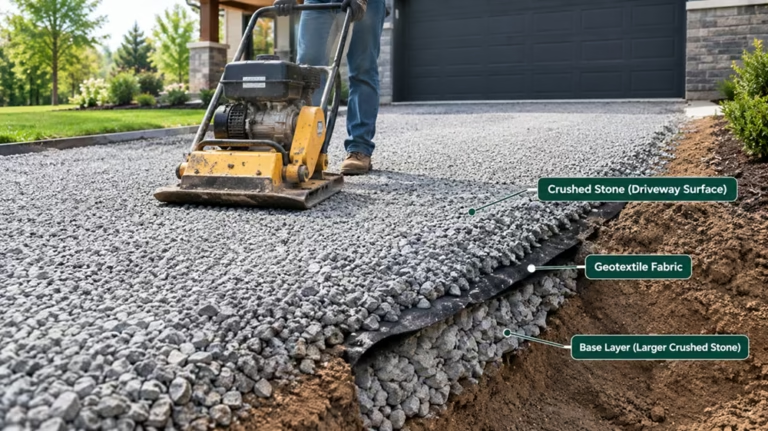 Gravel & StoneHow to Build a Gravel Driveway: Step by StepTo build a gravel driveway, dig out the grass and topsoil 8 to 12 inches deep, shape and…Read the guide →9 min read
1 thought on “Best Gravel for a Driveway: Types, Sizes and Layers”
Comments are closed.