Choose a wood or chain link fence, enter the length, height, corners and gates, and get the posts, rails, pickets or fabric you need, plus concrete for the posts.
Posts, depth and concrete
Post counts for corners and gates use common rules of thumb. Check post depth, footing size and height limits with your local code and any HOA rules.
How the wood fence count works
- Fence line: total length minus the width of the gates.
- Sections: fence line ÷ post spacing, rounded up.
- Posts: sections + 1, plus 1 extra for each corner and each gate.
- Rails: 2 or 3 per section, each as long as the post spacing.
- Pickets: fence line in inches ÷ the space each picket takes up, plus 5 percent extra.
- Post length: fence height + hole depth, rounded up to a standard post length.
Worked example
A 100 ft privacy fence, 6 ft high, with 2 corners, one 4 ft gate and posts 8 ft apart:
- Fence line: 100 − 4 = 96 ft, which is 12 sections
- Posts: 12 + 1 + 2 corners + 1 gate = 16 posts, 8 ft long with 2 ft in the ground
- Rails: 12 sections × 3 = 36 rails, 8 ft long
- Pickets: 96 × 12 ÷ 5.5 = 210, or 220 with 5 percent extra
- Concrete: about 1.5 bags of 80 lb per post in a 10 inch hole, 25 bags in total
Fence styles
| Style | How it’s built | Pickets compared with privacy |
|---|---|---|
| Privacy | Pickets butted side by side | Same |
| Spaced pickets | A gap between each picket, often 2 to 3 in | Fewer, about a third less with 2½ in gaps |
| Board-on-board | Two staggered layers that overlap, often by 1 to 1½ in | About 40 percent more |
Use the actual picket width. A “6 inch” picket is usually about 5½ inches wide.
Post spacing and depth
- Wood fence posts are usually 6 to 8 ft apart. 8 ft is the most common because rails come in 8 ft lengths.
- A common rule is to bury about a third to half of the post’s height above ground, and at least 2 ft. A 6 ft fence often uses 8 ft posts set 2 ft deep.
- In cold climates, set posts below the frost line, and go deeper in windy spots or loose soil.
- Most 6 ft fences use 3 rails. Fences up to about 4 or 5 ft usually use 2.
Chain link fences
- Line posts go no more than 10 ft apart.
- Terminal posts are the heavier posts at ends, corners and both sides of each gate.
- Top rail usually comes in 21 ft lengths that slip together.
- Fabric usually comes in 50 ft rolls in the height of your fence.
- Tension bars fix the fabric to terminal posts: one at ends and gate posts, two at corners. A common rule is one tension band per foot of fence height, minus one, for each bar.
For 100 ft of 4 ft chain link with 2 corners and one gate: 6 terminal posts, 7 line posts, 5 top rails, 2 rolls of fabric, 8 tension bars and 24 tension bands.
Before you dig
- In the US, call 811 a few days before you dig so underground lines can be marked.
- Confirm your property line, and check height limits and permits with your town and any HOA.
- For a closer look at post concrete, use the concrete footing calculator.
Frequently asked questions
How many fence posts do I need for 100 feet?
For a straight run with posts 8 ft apart, 14 posts. Add one for each corner and each gate.
How many pickets do I need?
For a privacy fence, divide the fence length in inches by the picket width, then add about 5 percent. 100 ft of 5½ inch pickets is about 230 pickets with extra.
How deep should fence posts be?
At least 2 ft, and often a third to half of the height above ground. Go below the frost line in cold areas.
How far apart should fence posts be?
6 to 8 ft for wood fences and up to 10 ft for chain link line posts.
How much concrete do I need per fence post?
For a 4×4 post in a 10 inch hole 2 ft deep, about 1.5 bags of 80 lb concrete.
Results are estimates for planning. Post counts for corners and gates use common rules of thumb. See How We Calculate for the formulas we use.
Guides for this project
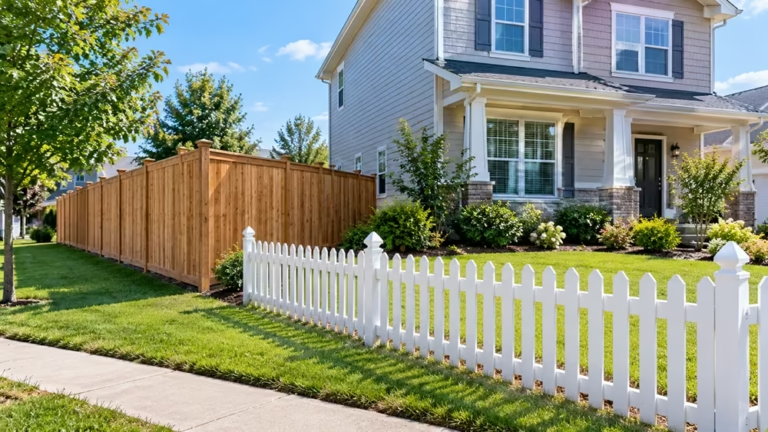 Decks, Stairs & FencesHow Tall Can a Fence Be? Standard Fence Heights and RulesThe standard fence height for a home is 6 feet in back and side yards and 3 to…Read the guide →8 min read
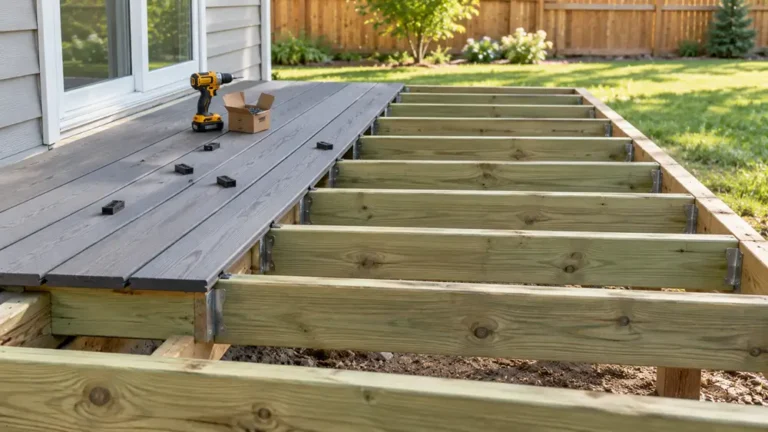 Decks, Stairs & FencesDeck Joist Spacing and Deck Board GapsMost decks use joists spaced 16 inches on center. That is the common limit for standard 5/4 wood…Read the guide →8 min read
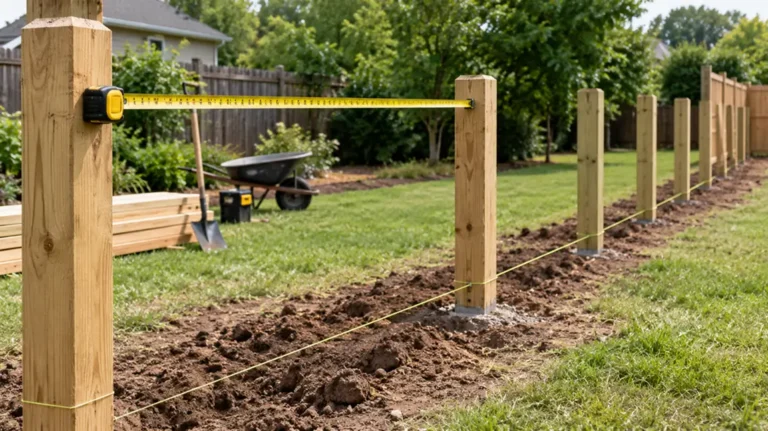 Decks, Stairs & FencesHow Far Apart Should Fence Posts Be? Spacing and Depth by Fence TypeMost wood fence posts should be 6 to 8 feet apart, measured center to center, with 8 feet…Read the guide →8 min read