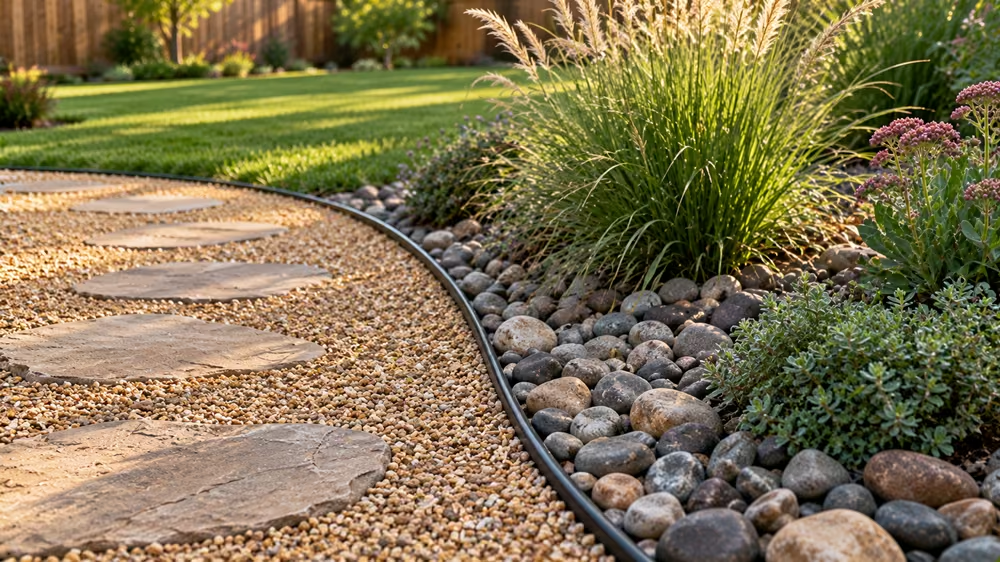
The short answer: pea gravel is small, smooth stone about ⅜ in across that is comfortable to walk on, so it suits paths, patios, play areas and dog runs. River rock is larger rounded stone, from about ¾ in to 5 in and up, so it suits flower beds, borders, dry creek beds and drainage areas where people don’t walk much. Both drain well, both roll and need edging, and neither feeds the soil the way mulch does.
This guide compares the two side by side, shows where each works best, how deep to spread them and how much they weigh. To work out cubic yards, tons and bags for your area, use the pea gravel calculator or the river rock calculator.
Pea gravel vs river rock at a glance
| Feature | Pea gravel | River rock |
|---|---|---|
| Size | About ¼ to ⅜ in | About ¾ in to 5 in, plus cobbles up to 8 in |
| Shape | Small, smooth and round | Larger, smooth and round |
| Underfoot | Comfortable to walk on | Uneven and hard to walk on |
| Best for | Paths, patios, play areas, dog runs | Beds, borders, dry creek beds, downspouts |
| Not ideal for | Slopes, main driveways | Walkways, patios, play areas |
| Typical depth | 2–4 in | 2–8 in, depending on rock size |
| Weight | About 1.4 tons per cubic yard | About 1.3–1.35 tons per cubic yard |
| Stays in place | Moves easily; needs edging | Heavier stones stay put better |
What is pea gravel?
Pea gravel is small, rounded stone, roughly the size of a pea. The most common size is about ⅜ in, with finer ¼ in gravel also sold. It is naturally smooth from being worn by water, then washed and screened to size, and it comes in tan, gray, white and mixed colors depending on where it was dug.
Because the stones are small and round, pea gravel feels soft underfoot and drains quickly. The same roundness means the stones roll and shift, so pea gravel never packs into a firm surface the way angular crushed stone does.
What is river rock?
River rock is smooth, rounded stone shaped by moving water, or tumbled to look that way. It is sold by size, and the size decides both how it looks and how deep you spread it:
| River rock size | Typical depth | Common uses |
|---|---|---|
| Small, ¾–1½ in | About 2 in | Beds, borders, between stepping stones |
| Medium, 1–3 in | About 3 in | Beds, dry creek beds, downspout areas |
| Large, 3–5 in | About 5 in | Dry creek beds, edges, drainage swales |
| Cobbles, 5–8 in | About 8 in | Accent areas, creek bed banks |
As a rule of thumb, spread river rock about as deep as the largest stones are wide, so the soil or fabric below doesn’t show between them. Our river rock calculator uses these depths by default for each size. Colors range from mixed browns and grays to white, black and polished Mexican beach pebbles.
Where to use pea gravel
- Paths and walkways: about 2 to 3 in deep. It is easy to walk on and pairs well with stepping stones or flagstone set into it.
- Patios and seating areas: about 3 to 4 in over a compacted base of crushed stone. More than about 4 in of loose pea gravel feels like walking on a beach.
- Play areas: pea gravel is one of the loose-fill surfaces used under play equipment, but it must be much deeper there than on a path. Follow the CPSC playground safety guidelines for the depth your equipment needs.
- Dog runs: about 3 in. It is gentle on paws, drains quickly and can be hosed off, though it gets hot in full sun and some dogs dig in it.
- Around succulents and in gravel gardens: about 2 in, where fast drainage is wanted.
Pea gravel always needs edging, such as steel, aluminum, stone or paver borders set slightly above the gravel, or it spreads into the lawn and beds. For patios, a plastic honeycomb stabilizer grid under the top layer keeps the stones from shifting and makes the surface firmer. The base under a patio works the same way as under pavers; see our guide to paver base material for the crushed stone layer.
Where to use river rock
- Flower and shrub beds: small or medium rock, about 2 to 3 in deep, in beds of plants that like it dry and warm.
- Borders and edges: a strip of river rock along a bed, fence or path edge.
- Dry creek beds: a mix of sizes, with large rock and cobbles along the sides and smaller rock in the channel, to carry runoff across the yard.
- Downspouts and drip lines: medium or large rock spreads the water and stops it from washing out soil.
- Next to the house: a strip of rock instead of wood mulch keeps a non-flammable, quick-drying band along the foundation. Keep it below the siding and slope the soil away from the walls.
River rock is not a good walking surface. The stones roll underfoot, and they are hard to rake smooth, so keep it out of paths and play areas.
Driveways and drainage
Is pea gravel good for a driveway?
Not as the main surface. Round stones don’t lock together, so cars push pea gravel into ruts, tires carry it into the street and lawn, and it is hard to shovel snow off. A driveway needs angular crushed stone that packs down firmly. If you like the look, use a thin top layer of 1 to 2 in of pea gravel over a compacted crushed-stone base with solid edging, or set it in stabilizer grids. River rock makes an even poorer driveway surface because the larger stones shift and roll.
Is pea gravel or river rock better for drainage?
Both drain well, because rounded stones leave open gaps for water. River rock is the usual choice for visible drainage such as dry creek beds and downspout splash areas, since larger stones resist washing away. Pea gravel is small, and in buried drains its gaps fill with soil faster unless the trench is lined with filter fabric. For French drains, washed ¾ in stone wrapped in fabric is the more common choice.
Do you need landscape fabric under river rock or pea gravel?
Under rock, usually yes. A layer of woven or non-woven landscape fabric, not solid plastic sheeting, between the soil and the stone keeps the rock from sinking into the soil, slows weeds from below and makes the stone much easier to remove later. University of Nevada, Reno Extension recommends landscape fabric under a rock mulch for the best weed control. Under a pea gravel path or patio, fabric keeps the gravel and base from mixing into the soil.
Fabric doesn’t stop every weed. Dust, leaves and seeds blow into the gaps between the stones, and weeds root in that debris on top of the fabric. Blow or rake out leaves each fall to keep the stone clean. Over many years, stone still works its way down and gets mixed with soil, which is why removing old rock is heavy work.
River rock or pea gravel vs mulch
Rock lasts for decades and doesn’t blow or float away, but it doesn’t do everything mulch does. Rock absorbs heat in the sun and gives it back to plants long after the sun goes down; Colorado State University Extension notes that organic mulches stay cooler than rock in sun. Rock also adds no organic matter to the soil, and light-colored stone can reflect heat onto nearby plants and walls.
- Choose rock for drainage areas, dry creek beds, strips next to the house, and beds of desert or drought-tolerant plants that like heat and fast drainage.
- Choose mulch around trees, shrubs, perennials and vegetables. Wood mulch keeps the soil cooler, breaks down to feed it, and is easier to change later.
If you go with mulch, the right depth matters as much as the material; see how deep mulch should be.
Comparing these with crushed stone, crusher run or sand? See how much a yard of gravel weighs, with a weight chart for each stone type.
Worked example: pea gravel and river rock for a 20 × 10 ft area
Both calculators start with a 20 × 10 ft area (200 sq ft). The pea gravel calculator uses a 3 in deep path with 10% extra for settling:
- Volume: 200 × 3 ÷ 12 = 50 cubic feet, plus 10% = 55 cubic feet
- Cubic yards: 55 ÷ 27 = 2.04 cubic yards
- Weight: 2.04 × 1.4 = 2.85 tons
- Bags: 55 ÷ 0.5 = 110 bags of 0.5 cubic feet
Here is how the same 200 sq ft compares for each project and rock size, using each calculator’s defaults (10% extra for pea gravel, 5% extra for river rock):
| Material and use | Depth | Cubic yards | Tons |
|---|---|---|---|
| Pea gravel, landscape bed | 2 in | 1.36 | 1.90 |
| Pea gravel, path | 3 in | 2.04 | 2.85 |
| Pea gravel, patio | 4 in | 2.72 | 3.80 |
| River rock, small | 2 in | 1.30 | 1.75 |
| River rock, medium | 3 in | 1.94 | 2.63 |
| River rock, large | 5 in | 3.24 | 4.21 |
Larger river rock has to be spread deeper to cover the ground, so it takes more material and weight for the same area. Gravel and rock are heavy: check your truck or trailer’s payload rating before you haul it yourself.
Frequently asked questions
Is pea gravel or river rock better?
It depends on the job. Pea gravel is better anywhere people walk, sit or play, such as paths, patios and dog runs. River rock is better for beds, borders, dry creek beds and drainage areas, where its larger stones stay in place and look more natural.
What is pea gravel used for?
Pea gravel is used for garden paths, patios, play areas, dog runs, gravel gardens and the gaps around stepping stones or flagstone. It is less suited to driveways and slopes, where the round stones roll and shift.
What size is pea gravel?
Most pea gravel is about ⅜ in across, roughly the size of a pea. Finer ¼ in pea gravel is also sold and feels smoother underfoot.
What sizes does river rock come in?
Common landscape sizes are small (about ¾ to 1½ in), medium (1 to 3 in), large (3 to 5 in) and cobbles (5 to 8 in). Larger stones need a deeper layer, about as deep as the stones are wide.
Is pea gravel good for drainage?
Yes, it drains quickly at the surface, which is why it works well for paths, patios and dog runs. In buried drains, its small gaps can fill with soil over time unless it is wrapped in filter fabric, so larger washed stone is more common there.
How deep should pea gravel be for a patio?
About 3 to 4 in of pea gravel over a compacted crushed-stone base, with edging around it. A stabilizer grid under the gravel makes the surface firmer for chairs and tables.
Do you need landscape fabric under river rock?
It is a good idea. Fabric keeps the rock from sinking into the soil, slows weeds from below and makes the rock easier to remove later. Use landscape fabric, not plastic sheeting, so water still soaks through.
Is river rock better than mulch?
Not for most planting beds. Rock lasts longer and suits drainage areas and dry, sunny beds, but it heats the soil and adds no organic matter. Wood mulch is better around trees, shrubs, perennials and vegetables.
How much does a yard of pea gravel weigh?
About 1.4 tons, or roughly 2,800 lb, per cubic yard when dry. River rock is a little lighter at about 1.3 to 1.35 tons per cubic yard, depending on the size.
Sizes and weights on this page are typical values; they vary by supplier and quarry, so check the product details before you order. Use the pea gravel calculator or the river rock calculator to work out cubic yards, tons and bags for your project.
Keep reading
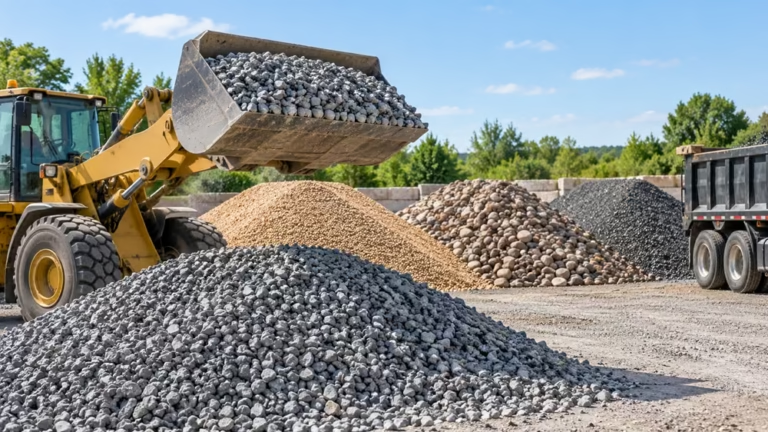 Gravel & StoneHow Much Does a Yard of Gravel Weigh? (By Stone Type)A cubic yard of gravel weighs about 1.4 tons, or roughly 2,800 lb. Most gravel and crushed stone…Read the guide →6 min read
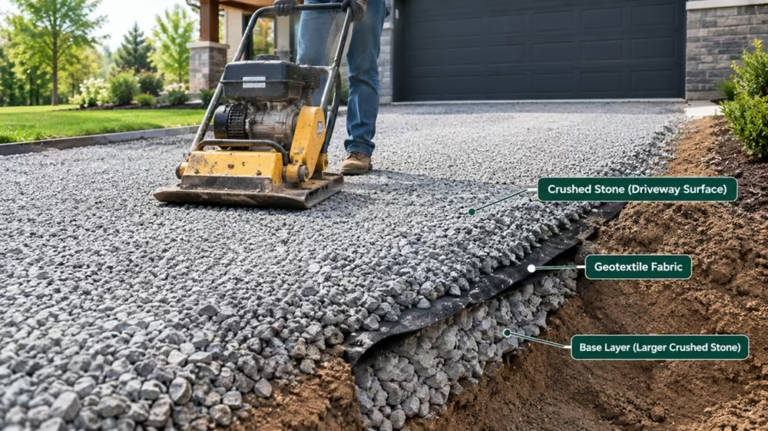 Gravel & StoneHow to Build a Gravel Driveway: Step by StepTo build a gravel driveway, dig out the grass and topsoil 8 to 12 inches deep, shape and…Read the guide →9 min read
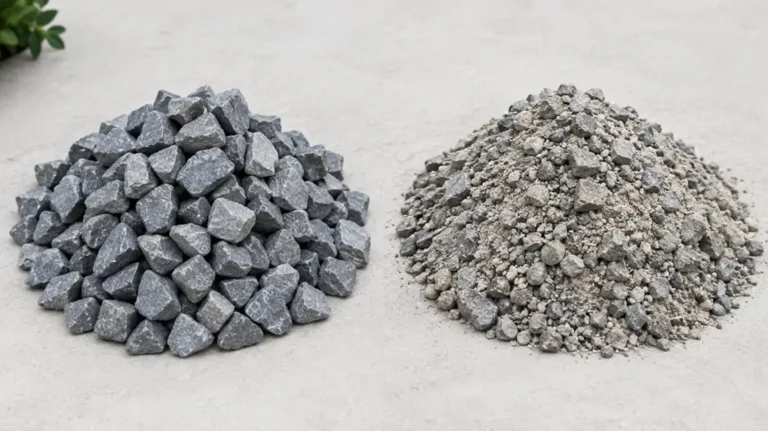 Gravel & StoneCrusher Run vs #57 Stone: Which One Do You Need?The main difference is stone dust. #57 stone is clean crushed stone, mostly ½ to 1 inch, with…Read the guide →9 min read