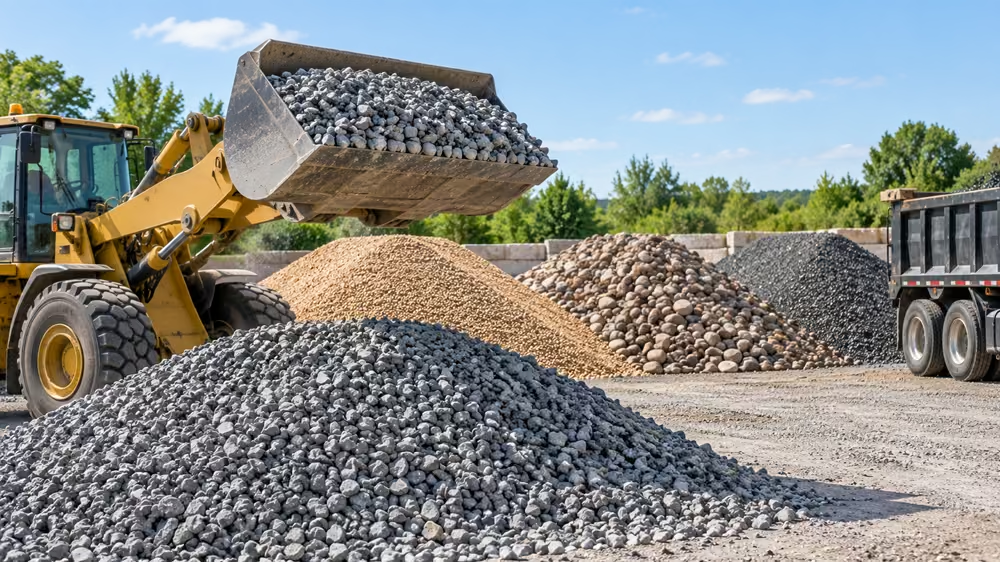
A cubic yard of gravel weighs about 1.4 tons, or roughly 2,800 lb. Most gravel and crushed stone falls between about 2,600 and 3,100 lb (1.3 to 1.55 tons) per cubic yard: clean stone such as #57 weighs about 2,700 lb, pea gravel about 2,800 lb, and crusher run about 3,100 lb because its fine dust fills the gaps between the stones. Lava rock is the big exception at about 1,200 lb. Wet gravel weighs more than dry.
That also means 1 ton of gravel is about 0.7 to 0.75 cubic yards. This guide gives the weight of each common stone type, how many yards are in a ton, how far a ton goes, and the weights of sand, dirt and other materials. To convert any amount between cubic yards and tons, use the cubic yards to tons calculator.
Gravel weight per cubic yard by type
Typical weights for dry, loose stone as it comes off the truck:
| Gravel or stone | Tons per cu yd | Pounds per cu yd | Pounds per cu ft | Cu yd per ton |
|---|---|---|---|---|
| #57 crushed stone (¾–1 in) | 1.35 | 2,700 | 100 | 0.74 |
| #3 crushed stone (1½–2 in) | 1.30 | 2,600 | 96 | 0.77 |
| #8 crushed stone (⅜–½ in) | 1.35 | 2,700 | 100 | 0.74 |
| #411 (#57 with stone dust) | 1.45 | 2,900 | 107 | 0.69 |
| Crusher run / road base | 1.55 | 3,100 | 115 | 0.65 |
| Stone dust / screenings | 1.40 | 2,800 | 104 | 0.71 |
| Pea gravel | 1.40 | 2,800 | 104 | 0.71 |
| River rock | 1.30–1.35 | 2,600–2,700 | 96–100 | 0.74–0.77 |
| Decomposed granite | 1.30 | 2,600 | 96 | 0.77 |
| Lava rock | 0.60 | 1,200 | 44 | 1.67 |
These are the same typical values our calculators use. Real loads vary by quarry and moisture, often by 10% or more, so when the weight matters, such as for a truck payload or a delivery priced by the ton, ask your supplier for the figure for their material.
Why gravel weights vary
- Fines fill the gaps: clean, single-size stone like #57 or pea gravel has open spaces between the stones. Crusher run and #411 include stone dust that fills those spaces, so the same yard holds more rock and weighs more.
- Rock type: dense rock such as basalt or trap rock weighs more per yard than lighter limestone or sandstone, and porous lava rock weighs less than half as much as most gravel.
- Moisture: wet or freshly washed stone carries water between and inside the stones. Rain on a stockpile can add noticeable weight to a load.
- Loose or compacted: weights above are for loose stone. Once spread and compacted, the same stone takes up less space, which is why our crushed stone calculator adds 15% extra for compaction.
How many cubic yards in a ton of gravel?
About 0.74 cubic yards, or 20 cubic feet, for #57 stone and most clean gravel. Heavier crusher run is about 0.65 cubic yards per ton, and pea gravel about 0.71. To convert, divide tons by the weight per cubic yard; to go the other way, multiply cubic yards by it.
| Tons of #57 stone | Cubic yards | Cubic feet |
|---|---|---|
| 1 ton | 0.74 | 20 |
| 5 tons | 3.70 | 100 |
| 10 tons | 7.41 | 200 |
| 15 tons | 11.1 | 300 |
| 20 tons | 14.8 | 400 |
How much does a ton of gravel cover?
A ton of #57 stone covers about 120 sq ft at 2 in deep, 80 sq ft at 3 in and 60 sq ft at 4 in. Heavier stone covers a little less per ton:
| Material | 2 in deep | 3 in deep | 4 in deep |
|---|---|---|---|
| 1 ton of #57 stone or river rock | 120 sq ft | 80 sq ft | 60 sq ft |
| 1 ton of pea gravel | 116 sq ft | 77 sq ft | 58 sq ft |
| 1 ton of crusher run | 105 sq ft | 70 sq ft | 52 sq ft |
| 1 cubic yard of any gravel | 162 sq ft | 108 sq ft | 81 sq ft |
These are exact coverage figures with nothing added for settling or compaction. To size a whole project from its length, width and depth, start with the gravel calculator, which gives cubic yards and tons together.
Weight of sand, dirt and other materials per yard
For comparison, here are typical weights for other bulk materials, again dry and loose:
| Material | Tons per cu yd | Pounds per cu yd | Pounds per cu ft |
|---|---|---|---|
| All-purpose or concrete sand | 1.35 | 2,700 | 100 |
| Fill sand | 1.40 | 2,800 | 104 |
| Fill dirt | 1.30 | 2,600 | 96 |
| Screened topsoil | 1.10 | 2,200 | 81 |
| Garden soil blend | 1.00 | 2,000 | 74 |
| Compost | 0.55 | 1,100 | 41 |
| Wood mulch | 0.2–0.4 | 400–800 | 15–30 |
| Concrete (fresh) | 2.03 | 4,060 | 150 |
| Asphalt (compacted) | 1.96 | 3,920 | 145 |
Soil and mulch change the most with moisture; wet topsoil or soaked mulch can weigh far more than these figures. For the differences between fill dirt, topsoil and garden soil, see topsoil vs garden soil vs fill dirt.
Hauling gravel: pickups and dump trucks
Pickup trucks: one cubic yard of gravel weighs about 2,700 to 3,100 lb, which is more than many half-ton pickups are rated to carry once passengers and the bed liner are counted. Check the payload figure on the sticker inside the driver’s door before loading, and ask the yard to load by weight rather than by bucket if you are close to the limit. A small utility trailer has its own weight rating, usually printed on its tongue or frame.
Dump trucks: what a delivery truck can carry depends on its axles and on state weight limits, not just on the size of its bed. As a rough guide, small single-axle trucks carry about 5 to 8 tons, common tandem-axle trucks about 12 to 16 tons, and tri-axle trucks around 18 to 22 tons. Because gravel is heavy, a truck often reaches its weight limit before its bed is full, so ask the supplier how many tons or yards fit in one load.
Suppliers sell gravel by the ton, by the cubic yard, or both. When you compare quotes, convert them to the same unit using the weight for that exact material.
Worked example: 10 cubic yards of gravel in tons
The cubic yards to tons calculator starts with 10 cubic yards of #57 crushed stone:
- Tons: 10 × 1.35 = 13.5 tons
- Pounds: 13.5 × 2,000 = 27,000 lb
- Metric tonnes: about 12.2
The same 10 cubic yards in other materials:
| Material | Tons for 10 cu yd | Pounds |
|---|---|---|
| #57 crushed stone | 13.5 | 27,000 |
| River rock | 13.5 | 27,000 |
| Pea gravel | 14 | 28,000 |
| Crusher run / road base | 15.5 | 31,000 |
Switching the calculator to tons to cubic yards works the other way: 13.5 tons of #57 stone is 10 cubic yards, or 270 cubic feet. Ten yards of crusher run, at 15.5 tons, is near the top of what a tandem truck can legally carry, while the same volume of #57 stone leaves more room to spare. For a side-by-side look at two popular landscape stones, see pea gravel vs river rock.
Frequently asked questions
How much does a yard of gravel weigh?
About 1.4 tons, or roughly 2,800 lb, per cubic yard. Most gravel falls between about 2,600 and 3,100 lb depending on the stone type, size and moisture.
How many yards are in a ton of gravel?
About 0.7 to 0.75 cubic yards. One ton of #57 stone is about 0.74 cubic yards, or 20 cubic feet; one ton of crusher run is about 0.65 cubic yards.
How much does a yard of crushed stone weigh?
About 2,700 lb (1.35 tons) for clean crushed stone such as #57, and about 3,100 lb (1.55 tons) for crusher run with stone dust mixed in.
How much does a yard of pea gravel weigh?
About 2,800 lb, or 1.4 tons, per cubic yard when dry.
How much does a yard of river rock weigh?
About 2,600 to 2,700 lb (1.3 to 1.35 tons) per cubic yard. Larger rock weighs slightly less per yard because of the bigger gaps between the stones.
How much does a yard of sand weigh?
About 2,700 lb (1.35 tons) for dry all-purpose sand and about 2,800 lb for fill sand. Damp sand weighs more.
How much does a ton of gravel cover?
A ton of #57 stone covers about 120 sq ft at 2 in deep, 80 sq ft at 3 in and 60 sq ft at 4 in. Denser stone such as crusher run covers a little less.
How many tons of gravel are in a dump truck?
It depends on the truck. Small single-axle trucks carry about 5 to 8 tons, common tandem-axle trucks about 12 to 16 tons, and tri-axle trucks around 18 to 22 tons, within state weight limits. Ask the supplier what their trucks carry.
How much does a 5-gallon bucket of gravel or sand weigh?
About 65 to 70 lb when dry. A 5-gallon bucket holds about 0.67 cubic feet, and most gravel and sand weighs about 100 lb per cubic foot.
How many cubic feet are in a 50 lb bag of sand?
About 0.5 cubic feet, since dry sand weighs about 100 lb per cubic foot. It takes about 54 of these bags to make one cubic yard.
Weights on this page are typical values for dry, loose material and vary by quarry, rock type and moisture. Ask your supplier for the weight of their material when a load must stay under a weight limit. Use the cubic yards to tons calculator to convert any amount for the material you are buying.
Keep reading
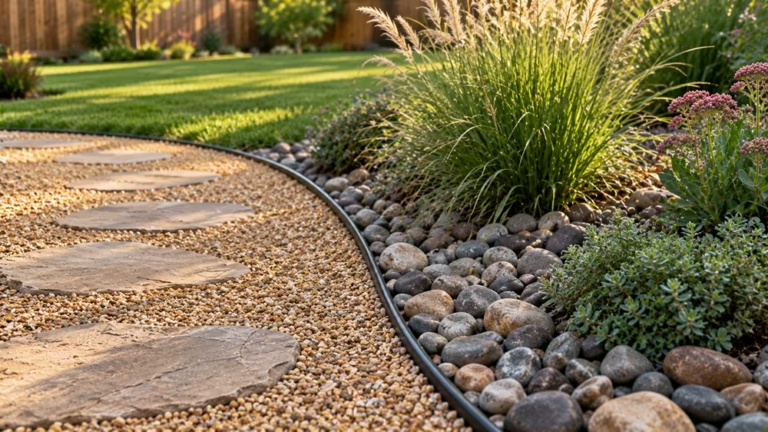 Gravel & StonePea Gravel vs River Rock: Which to Use WhereThe short answer: pea gravel is small, smooth stone about ⅜ in across that is comfortable to walk…Read the guide →9 min read
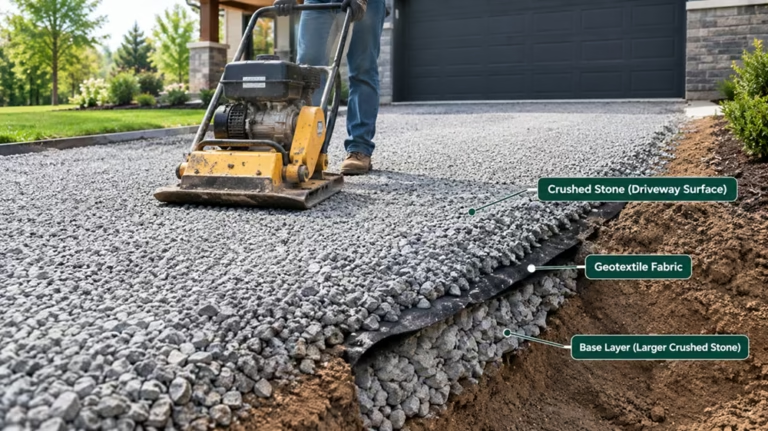 Gravel & StoneHow to Build a Gravel Driveway: Step by StepTo build a gravel driveway, dig out the grass and topsoil 8 to 12 inches deep, shape and…Read the guide →9 min read
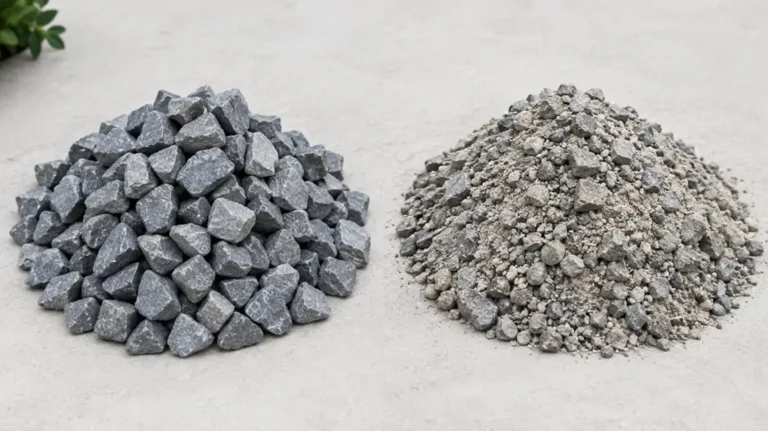 Gravel & StoneCrusher Run vs #57 Stone: Which One Do You Need?The main difference is stone dust. #57 stone is clean crushed stone, mostly ½ to 1 inch, with…Read the guide →9 min read