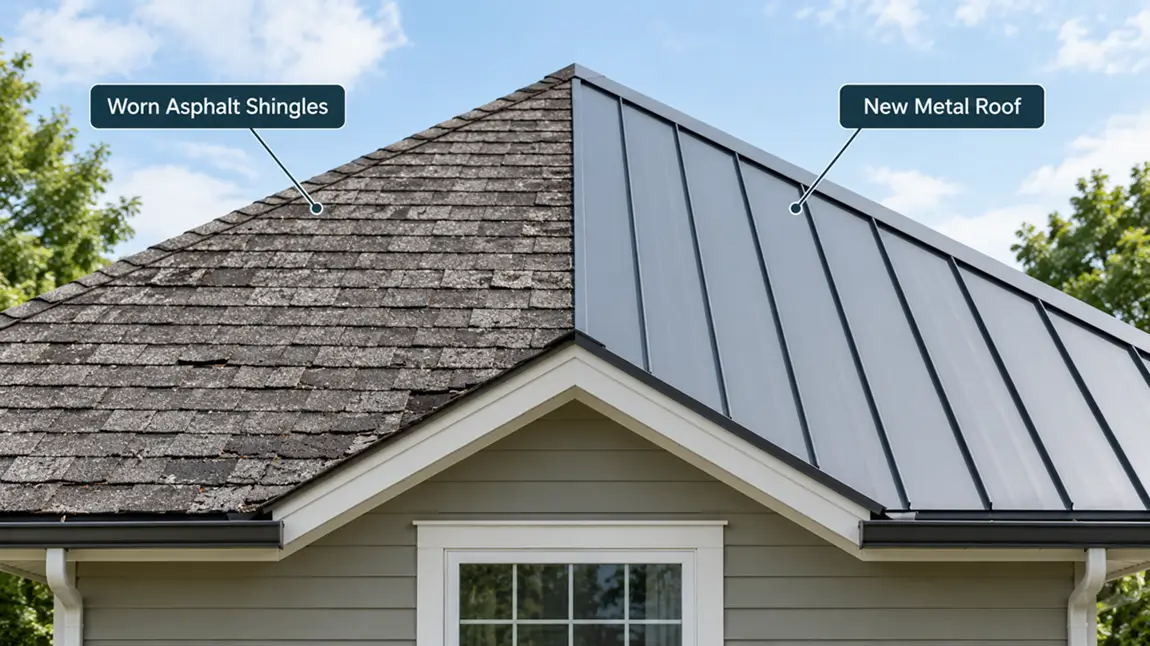
Most roofs last 15 to 30 years with asphalt shingles, 40 to 70 years with metal, and 50 to 100 years or more with clay tile or slate. Flat roofs on homes usually last 15 to 30 years, depending on the membrane. These are typical ranges for a well-installed roof. Climate, attic ventilation, roof pitch and upkeep can add years or take them away.
The number on a shingle package, such as “30 year”, is a warranty term, not a promise of how long the roof will actually last. This guide gives realistic lifespans for each roofing material, explains what shortens a roof’s life, and shows the signs that it’s time to replace yours.
Roof lifespan chart
| Roofing material | Typical lifespan | Notes |
|---|---|---|
| 3-tab asphalt shingles | 15 to 20 years | Thin, flat shingles. Being phased out by many makers. |
| Architectural (dimensional) shingles | 25 to 30 years | The most common roof on new US homes. |
| Premium or designer asphalt shingles | 30 years or more | Thicker shingles that look like slate or shakes. |
| Exposed-fastener metal (corrugated, ribbed) | 20 to 40 years | Screw washers wear out first and need checking. |
| Standing seam metal | 40 to 70 years | Hidden fasteners and raised seams. |
| Metal and stone-coated steel shingles | 40 to 70 years | Metal shaped to look like shingles, shakes or tile. |
| Copper or zinc | 60 to 100+ years | Very long-lasting metals that weather naturally. |
| Concrete tile | 30 to 50 years | The underlayment below often needs replacing sooner. |
| Clay tile | 50 to 100+ years | Same underlayment caution as concrete tile. |
| Natural slate | 75 to 150+ years | Hard slate lasts longer than soft slate. |
| Synthetic slate or shake | 30 to 50 years | Lighter than real slate or wood. |
| Cedar shakes and shingles | 20 to 40 years | Shorter in wet, shaded or humid areas. |
| Thatch | 25 to 50 years | Depends on reed or straw. The ridge needs redoing more often. |
| TPO or PVC (flat roof) | 15 to 30 years | Single-ply membranes for low-slope roofs. |
| EPDM rubber (flat roof) | 20 to 30 years | Common on porches, garages and additions. |
| Built-up (tar and gravel) | 20 to 30 years | Layers of felt and asphalt under gravel. |
| Modified bitumen | 10 to 20 years | Rolled asphalt membrane for low slopes. |
| Rolled roofing | 5 to 10 years | Cheap and short-lived. Best for sheds and outbuildings. |
These are typical ranges, not guarantees. A roof can fail early from poor installation or storm damage, and a well-kept roof in a mild climate can outlast the top of its range.
How long does an asphalt shingle roof last?
An asphalt shingle roof lasts about 15 to 30 years. Thin 3-tab shingles sit at the low end, usually 15 to 20 years. Architectural shingles, which are thicker and layered, usually last 25 to 30 years. In very hot, sunny climates, expect the lower end of each range.
Do 30 year shingles really last 30 years?
Often not. “30 year”, “40 year” and “lifetime” are warranty labels, and the warranties are usually limited and prorated, meaning they cover less as the roof ages. Many 30 year shingles actually last about 20 to 25 years in real conditions. “Lifetime” usually means for as long as the original owner owns the house, under the warranty’s terms, not that the roof will last forever. Read the warranty for what it covers, and judge the roof by its condition rather than the number on the package.
How long does a metal roof last?
A metal roof lasts about 40 to 70 years, and some last longer. The type of metal roof matters:
- Standing seam: 40 to 70 years. The fasteners are hidden under the seams, so there are no screw holes open to the weather.
- Exposed-fastener panels (corrugated or ribbed “tin” roofs): 20 to 40 years for the roof as a whole. The panels can last longer, but the rubber washers on the screws wear out and need checking and replacing over time.
- Metal shingles and stone-coated steel: 40 to 70 years. They look like asphalt shingles, shakes or tile but last much longer.
- Aluminum, copper and zinc: 50 years to well over 100 years. Aluminum doesn’t rust, which makes it a good choice near the ocean.
Do metal roofs rust?
Steel roofing is coated with zinc (galvanized) or a zinc and aluminum mix (Galvalume), and usually painted, so it resists rust for decades. Rust usually starts at scratches, cut edges, and spots where water sits or where other metals touch the roof. Aluminum, copper and zinc roofs don’t rust in the same way.
If you’re planning a metal roof, the metal roofing calculator counts the panels and trim for your roof.
Weighing metal against asphalt shingles? Our guide to metal roof vs shingles compares cost per year, wind and hail resistance, noise and weight.
How long do tile and slate roofs last?
Clay tile can last 50 to 100 years or more, concrete tile about 30 to 50 years, and natural slate 75 to 150 years or more. The tiles and slates are rarely what fails first. On tile roofs, the underlayment beneath the tiles usually wears out after about 20 to 30 years, especially in hot climates like Florida and Arizona. Replacing it means lifting the tiles and relaying them, which is much cheaper than a whole new roof.
On slate roofs, the copper or steel nails and flashing often wear out before the slate does. A roofer who knows slate can repair them and keep the roof going for decades.
How long does a flat roof last?
Flat and low-slope roofs on homes usually last 15 to 30 years. EPDM rubber and built-up tar and gravel roofs tend to last 20 to 30 years, TPO and PVC 15 to 30 years, and modified bitumen 10 to 20 years. Flat roofs wear out faster where water ponds on them, so good drainage matters more than the material.
What affects how long a roof lasts?
- Climate. Strong sun and heat dry out asphalt shingles faster, which is why roofs in Florida, Texas and Arizona often sit at the low end of their range. Hail, hurricanes and freeze-thaw cycles in colder states cause damage of their own.
- Attic ventilation. A hot, poorly vented attic bakes shingles from below and can take years off their life. It can also void the shingle warranty.
- Installation. Wrong nailing, missing underlayment and poor flashing are among the most common reasons roofs fail early.
- Roof pitch. Steep roofs shed water and snow quickly. Low-slope roofs hold water longer and wear faster.
- Color and shade. Dark roofs run hotter in the sun. Heavy shade keeps roofs damp and lets moss and algae grow.
- Layers. A second layer of shingles over an old one holds heat and usually doesn’t last as long as a roof laid on a clean deck.
- Maintenance. Clean gutters, trimmed branches and quick repairs after storms add years to any roof.
Signs you need a new roof
- The roof is near or past the end of its typical lifespan.
- Shingles are curling, cupping, cracked or missing.
- Bare spots where the granules have worn off, and lots of granules in the gutters.
- Water stains on ceilings or in the attic, or leaks in more than one place.
- Daylight through the roof boards when you look from the attic.
- A roof line that sags or a deck that feels soft underfoot.
- Rusted, loose or missing flashing around chimneys, vents and walls.
- Moss or algae that keeps coming back on a roof that’s already older.
One or two damaged shingles on a newer roof usually just need a repair. Damage spread across the roof, or several of these signs on an older roof, usually means it’s time to replace it.
How often should a roof be replaced?
Replace a roof when it reaches the end of its useful life or when damage is too widespread to repair, not on a fixed schedule. For a typical asphalt shingle home, that’s about every 20 to 25 years. Metal, tile and slate roofs may last the life of the house with repairs along the way.
Repair or replace?
A common rule of thumb is to repair a roof that’s in its first half of life with damage limited to one area, and to replace a roof that’s near the end of its lifespan or has damage across much of its surface. Paying for repeated repairs on an old roof often costs more over time than replacing it.
When is the best time to replace a roof?
Late spring through early fall is usually best. Asphalt shingles need warm, dry weather to seal down properly, and roofers can work faster in mild weather. Fall is a popular time, so book early. Most roofs on single-family homes take about one to three days to replace, depending on the size, the weather and how much decking needs repair.
How to find out how old your roof is
- Check your city or county building permit records, which often list roof replacements.
- Look at the home inspection report from when you bought the house.
- Ask the previous owners, or look for receipts and a registered shingle warranty.
- Ask a roofer to estimate the age from the shingle style and condition.
Many home insurers ask for the roof’s age, and some limit coverage on older roofs, so it’s worth keeping the paperwork once you replace it.
Planning a roof replacement: a worked example
Say your house measures 40 × 30 ft including the overhangs, with a 6/12 roof pitch:
- House footprint: 40 × 30 = 1,200 sq ft
- Pitch factor for 6/12: about 1.118, because a sloped roof is larger than the floor below it
- Roof area: 1,200 × 1.118 = 1,342 sq ft
- Add 10% for waste: 1,342 × 1.10 = 1,476 sq ft, or 14.8 squares (1 square = 100 sq ft)
- At 3 bundles of shingles per square: 45 bundles
These are the default numbers in our roofing calculator, which also works out underlayment, drip edge, starter strip and ridge cap for gable and hip roofs. If you don’t know your pitch, the roof pitch calculator converts a rise and run or an angle. To budget the job with your own contractor’s prices for the roof, tear-off, decking and fees, use the roof replacement cost calculator.
Roof pitch also affects which materials you can use and how fast a roof drains; see our roof pitch chart for common pitches and minimum slopes.
Frequently asked questions
How long does a roof last on average?
About 20 to 25 years for the asphalt shingle roofs found on most US homes. Metal roofs last about 40 to 70 years, and tile and slate roofs can last 50 to 100 years or more.
How long does an architectural shingle roof last?
About 25 to 30 years with good installation and attic ventilation. In very hot climates, or with poor ventilation, expect closer to 20 years.
Do metal roofs last longer than shingles?
Yes. A metal roof usually lasts two to three times as long as an asphalt shingle roof: about 40 to 70 years compared with 15 to 30 years.
How long do solar panels last on a roof?
Most solar panels last about 25 to 30 years. Because panels have to be removed to replace the roof under them, many installers suggest replacing an older roof first so the roof and panels wear out at about the same time.
How long does a roof last in Florida?
Heat, sun and storms shorten roof life in Florida. Asphalt shingles often last about 15 to 20 years there. Metal roofs hold up well, and tile roofs last a long time, though the underlayment under the tile often needs replacing after about 20 to 25 years.
How long does a rubber roof last?
An EPDM rubber roof usually lasts about 20 to 30 years. Seams and flashing are the weak points, so check them every year and repair them early.
Lifespans in this guide are typical ranges for planning. Your roof’s real life depends on its installation, your climate and its upkeep, so have a licensed roofer inspect it before you decide to repair or replace it.
Keep reading
 Roofing & SidingRoof Pitch Chart: Common Roof Pitches Explained (4/12, 6/12, 8/12 and More)Roof pitch is how many inches a roof rises for every 12 inches it runs across, written as…Read the guide →7 min read
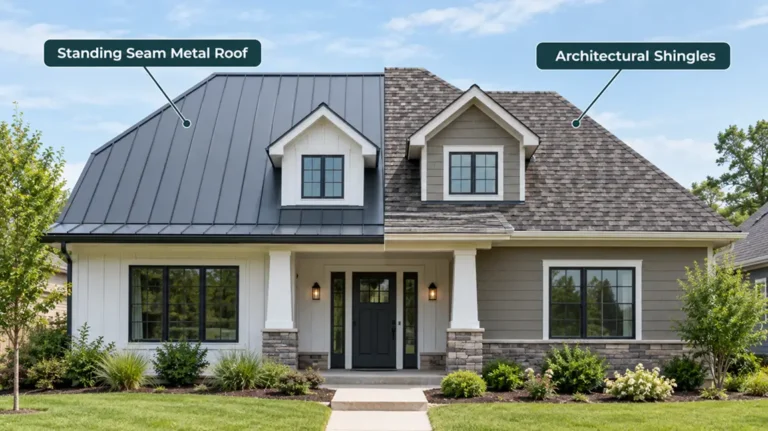 Roofing & SidingMetal Roof vs Shingles: Lifespan, Cost Factors, Pros and ConsA metal roof usually lasts 40 to 70 years, stands up well to wind, fire and snow, and…Read the guide →13 min read
 Walls, Ceilings & LightingPaint Sheens Explained: Flat, Eggshell, Satin, Semi-GlossPaint sheen is how shiny the dried paint looks. From least to most shiny, the common sheens are…Read the guide →8 min read