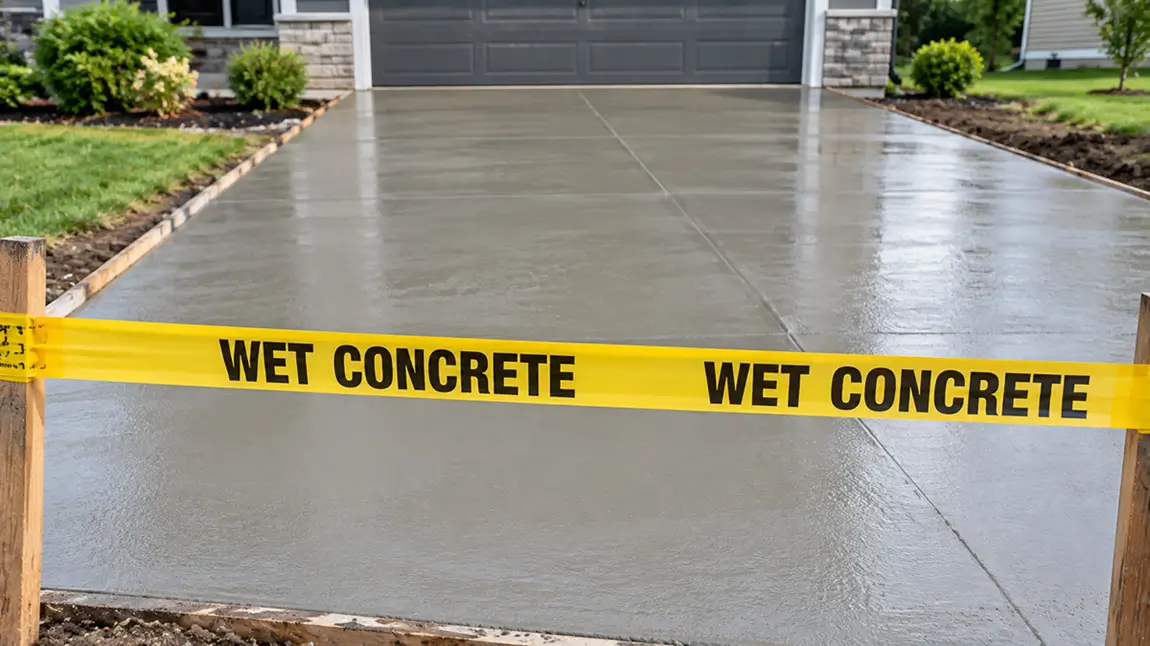
Concrete is hard enough to walk on after 24 to 48 hours and to drive a car on after about 7 days. It reaches its full design strength at 28 days, which is when heavy trucks can use it and most sealers and paints can go on. These times are for normal concrete in mild weather, around 70°F. Cold weather slows everything down, and hot, dry weather can weaken concrete if it isn’t kept damp.
Curing and drying are not the same thing, and mixing them up is the most common reason new concrete cracks or flakes. This guide explains the difference, gives you a day-by-day timeline, and shows how to cure concrete so it reaches full strength.
Concrete curing time chart
For regular concrete at about 70°F:
| Time after pouring | What you can do | Strength reached |
|---|---|---|
| A few hours | Concrete starts to set and can no longer be worked. Keep everyone off it. | Very low |
| 24 to 48 hours | Light foot traffic. Forms can usually come off a slab. | Low |
| 3 days | Normal walking, light furniture, wheelbarrows. Still no cars. | About 40% |
| 7 days | Cars and light pickup trucks can drive and park on it. | About 70% |
| 28 days | Heavy trucks, RVs and equipment. Most sealers, paints and stains can go on. | Full design strength |
Concrete keeps getting a little stronger for months after 28 days, but 28 days is the point where it reaches the strength it was designed for.
Curing vs drying: what’s the difference?
Curing is the chemical reaction between cement and water that makes concrete hard and strong. It needs water. If the surface dries out too soon, the reaction stops near the top, and the concrete ends up weaker, dusty or cracked.
Drying is the extra water slowly leaving the slab. That matters mostly indoors, before you put flooring on top. A common rule of thumb is that a slab dries about 1 inch per month in good conditions, so a 4 inch slab can take around 4 months to dry enough for wood, vinyl or carpet. Always test the moisture before installing flooring, because glue and wood can fail on a damp slab.
So the answer to “how long does concrete take to dry” depends on what you mean. The surface looks dry within a day, it’s strong enough for cars in a week, and it can take months to dry out fully inside.
When can you walk on new concrete?
Wait at least 24 hours before walking on new concrete, and 48 hours if you can. Walk carefully at first and avoid twisting your feet, dragging anything or letting pets run on it. After about 3 days, normal foot traffic and light items like patio chairs are fine.
When can you drive on new concrete?
Most driveways can take a car after 7 days. By then the concrete has reached about 70 percent of its strength. Keep heavier vehicles, such as a loaded pickup, a delivery truck, an RV or a dumpster, off it for the full 28 days. In cool weather, add a few extra days before driving on it.
Driving on it after only 3 days is a risk. The surface may look hard, but the slab is still weak, especially at the edges, and tires can crack or chip it.
How temperature changes curing time
| Air temperature | What happens |
|---|---|
| Above 90°F | Concrete sets fast and the surface dries out quickly. Keep it damp to stop cracks. |
| 70 to 90°F | Normal curing. The times in the chart above apply. |
| 50 to 70°F | Slower. Add a day or two before walking or driving on it. |
| 40 to 50°F | Much slower. Strength can build about half as fast as at 70°F. Cover the slab to hold in heat. |
| Below 40°F | The reaction nearly stops. New concrete must not freeze, so use insulated blankets or wait for warmer weather. |
Freezing is the biggest danger in the first few days. Water inside young concrete expands as it freezes and can damage the slab for good. Protect it from freezing for at least the first 2 days, and longer when it’s cold.
How to cure concrete the right way
Good curing keeps the concrete damp and at a steady temperature, especially during the first 7 days. Concrete industry guidance from the American Concrete Institute calls for at least 7 days of curing for regular concrete.
- Water curing. Lightly mist or sprinkle the slab several times a day once it has hardened enough not to mark, so the surface never dries out. This is the simplest method for a patio or driveway.
- Cover it. Plastic sheeting or wet burlap holds moisture in. Weigh the edges down so wind can’t lift them.
- Curing compound. A spray-on liquid forms a film that keeps water in. It’s handy when you can’t water the slab every day.
- Shade and wind breaks. On hot, windy days, the surface can dry out in minutes. Pour early in the morning if you can.
What if it rains after pouring?
Rain is a problem mostly in the first few hours, before the surface sets. Heavy rain on fresh concrete can wash out the cement and leave a rough, weak surface. Cover the slab with plastic if rain is coming in the first 4 to 8 hours. Once the concrete has set, usually after about 12 hours in mild weather, rain does little harm and actually helps keep it damp for curing.
Fast-setting concrete and mortar
Fast-setting concrete mixes, often used for fence and mailbox posts, harden in well under an hour, and many can take light loads after a few hours. Times vary a lot between products, so follow the bag. For posts, the concrete footing calculator works out the bags for each hole.
Mortar between bricks and blocks usually sets enough to hold its shape within a day, and gains full strength over about 28 days, like concrete. Keep it damp in hot weather as well.
Plan your pour
Ordering the right amount helps the job go smoothly, because a slab should be poured in one go. The concrete calculator works out cubic yards and bags, and our guide to how thick a concrete slab should be covers the right thickness for patios, driveways and garages.
Still planning the pour? Our step-by-step guide on how to pour a concrete slab covers the forms, rebar, control joints and finishing.
Frequently asked questions
How long does concrete take to dry?
The surface looks dry within a day, and you can walk on it after 24 to 48 hours. It reaches full strength in 28 days. Inside a house, a slab can take about a month per inch of thickness to dry enough for flooring, so test the moisture before you install anything.
How long should concrete cure before putting weight on it?
Light foot traffic after 24 to 48 hours, furniture and light items after about 3 days, cars after 7 days, and heavy trucks or equipment after 28 days.
Can you drive on new concrete after 3 days?
It’s not a good idea. At 3 days, concrete has only about 40 percent of its strength. Wait at least 7 days for a car, and longer in cool weather.
How long does concrete need to cure before freezing?
Protect new concrete from freezing for at least the first 2 days, and longer in cold weather. Insulated curing blankets help hold in the heat the concrete gives off as it cures.
Should you water new concrete?
Yes, especially in hot, dry or windy weather. Keeping the surface damp for the first 7 days helps the concrete cure fully and makes it stronger and less likely to crack. Start once the surface is hard enough that water won’t mark it.
When can you remove concrete forms?
For most slabs, sidewalks and patios, forms can come off after 24 to 48 hours. Forms that hold up walls or overhead concrete stay on much longer and should follow the plans.
How long should you wait to seal new concrete?
Many sealer makers ask you to wait up to 28 days so the concrete can cure and release moisture. Some products can go on sooner, so check the label.
Times here are typical for regular concrete in mild weather and are a guide for planning. Special mixes, cold or hot weather, and heavy loads can change them, so follow the product instructions and your contractor’s advice.
Keep reading
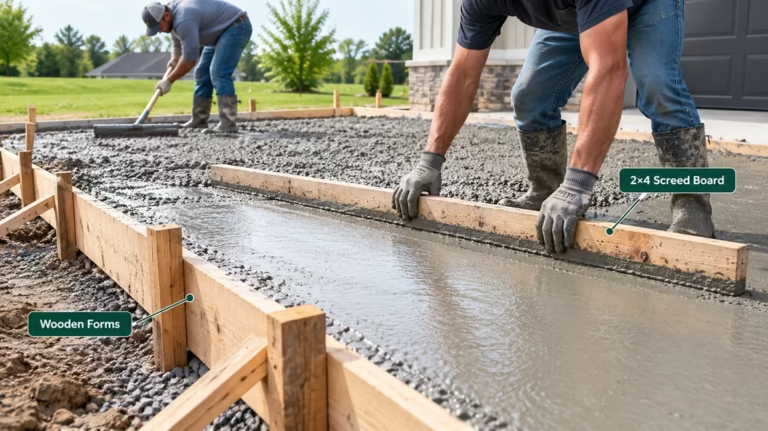 Concrete & AsphaltHow to Pour a Concrete Slab: Step by StepTo pour a concrete slab, dig out the area, compact the soil, add about 4 inches of compacted…Read the guide →10 min read
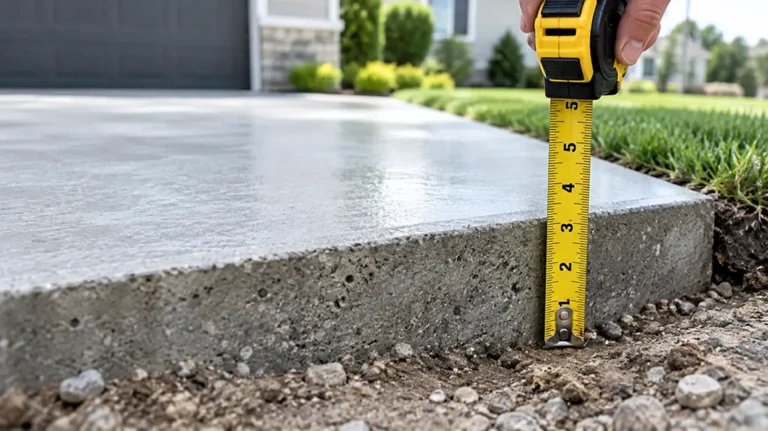 Concrete & AsphaltHow Thick Should a Concrete Slab Be? Driveways, Patios, Garages and MoreMost concrete slabs around a home are 4 inches thick. That covers patios, sidewalks, shed floors, garage floors…Read the guide →7 min read
 Walls, Ceilings & LightingPaint Sheens Explained: Flat, Eggshell, Satin, Semi-GlossPaint sheen is how shiny the dried paint looks. From least to most shiny, the common sheens are…Read the guide →8 min read