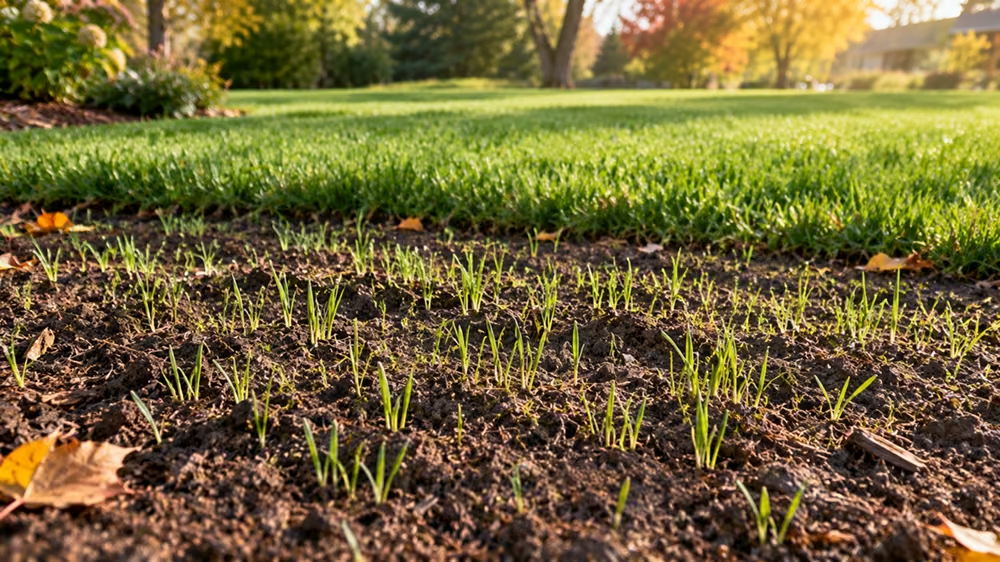
The best time to plant grass seed depends on your grass type. For cool-season grasses such as tall fescue, Kentucky bluegrass, perennial ryegrass and fine fescue, seed in late summer to early fall: roughly mid-August to mid-September in the North, and into early October farther south. For warm-season grasses such as Bermuda, zoysia, centipede and bahia, seed in late spring to early summer, once the soil has warmed to about 65 to 70°F. Spring is the second-best time for cool-season seed, and fall is the wrong time for warm-season seed.
This guide covers the best seeding time by grass type and region, the soil temperatures seed needs, when to overseed, and how long grass seed takes to grow. To work out how many pounds of seed your lawn needs, use the grass seed calculator.
Best time to plant grass seed by grass type
| Grass type | Common grasses | Best time | Second choice |
|---|---|---|---|
| Cool-season | Tall fescue, Kentucky bluegrass, perennial ryegrass, fine fescue | Late summer to early fall | Early spring |
| Warm-season | Bermuda, zoysia, centipede, bahia | Late spring to early summer | Midsummer, with steady watering |
The rule behind both rows is the same: plant just before the grass enters its strongest growing season. Cool-season grasses grow best in the cool weather of fall and spring, so fall seeding gives them two cool seasons to root before their first summer. Warm-season grasses grow fastest in heat, so they go in once the soil is warm and have the whole summer to spread before they go dormant.
Best time to plant grass seed by region
| Region | Usual grass | Best time to seed |
|---|---|---|
| North, Midwest and Northeast (Ohio, Michigan, Indiana, Pennsylvania, New Jersey) | Cool-season | Mid-August to mid-September |
| Transition zone (Kentucky, Tennessee, Missouri, Virginia, North Carolina Piedmont) | Mostly tall fescue; some Bermuda and zoysia | Tall fescue: late August to mid-October. Bermuda and zoysia: late spring to early summer |
| South (Texas, Florida, Georgia, the Gulf Coast) | Warm-season | Late spring to early summer, once the soil reaches 65°F or more |
Dates shift with your local weather, elevation and first frost, so treat them as a starting point. Soil temperature is a more reliable guide than the calendar.
Soil temperature for grass seed
Seed sprouts when the soil, not the air, reaches the right temperature. Soil warms and cools more slowly than air, which is why late summer soil stays warm enough for fast germination even as the days start to cool.
| Grass type | Starts to sprout | Good seeding conditions |
|---|---|---|
| Cool-season | About 50°F | Soil about 50–65°F, daytime air in the 60s and 70s |
| Warm-season | About 65–70°F | Soil 70°F and up, daytime air around 80°F or more |
Warm-season seed in particular is slow in cool soil. NC State Extension notes that it germinates and develops well once the soil holds steady at 65 to 70°F, which usually lines up with daytime highs of 80°F or more. Check with a soil thermometer pushed an inch or two into the ground, or look up the soil temperature data your state extension service publishes.
Why fall beats spring for cool-season grass
- Warm soil, cool air: seed sprouts fast in the warm late-summer soil, while cooler air is easier on young grass.
- Fewer weeds: crabgrass and other summer annual weeds are finishing their season and die with the first frost, so they don’t crowd out the seedlings.
- More time to root: fall-seeded grass grows roots through the fall and again in spring, so it is far stronger when summer heat arrives.
- Better rain: fall rain and lower evaporation make it easier to keep seed moist.
Spring seeding can work, but it has two problems. Most crabgrass preventers also stop grass seed from sprouting, so you usually can’t use them on a newly seeded lawn; only a few products are labeled for use at seeding, so check the label. And spring seedlings have only a few months to root before summer heat and dry spells, so they need regular watering through their first summer. If you must seed in spring, seed as early as the ground can be worked so the grass is up before the weeds.
Can you plant grass seed in summer or winter?
Summer
Summer is a good time for warm-season seed, as long as you water often enough to keep the top inch of soil moist. Finish early enough for the grass to grow in before fall; plantings made late in the season may not be mature enough to get through the winter. Cool-season seed sown in midsummer usually struggles with heat and drought, so wait until late summer if you can.
Winter (dormant seeding)
Cool-season seed can be spread in late fall or winter, once the soil is too cold for it to sprout. This is called dormant seeding. The seed sits in the soil, the freeze and thaw cycles work it into good contact, and it germinates as the soil warms in spring. It works best on bare soil where the seed touches the ground. The risk is the in-between window: seed that sprouts during a warm spell in late fall can be killed by the next hard freeze, so wait until the soil stays cold. Warm-season grasses should not be dormant-seeded.
When to overseed a lawn
Cool-season lawns: overseed at the same time you would seed a new lawn, in late summer to early fall, with early spring as the second choice. Overseeding uses about half the new-lawn rate; for tall fescue, the grass seed calculator uses 4 lb per 1,000 sq ft for overseeding instead of 7 lb for a new lawn. Mow the lawn short and rake or core-aerate first so the seed reaches the soil instead of sitting on top of the grass.
Warm-season lawns: seeding Bermuda, zoysia or centipede into an existing warm-season lawn rarely works, because the established grass shades and outcompetes the seedlings. Thin warm-season lawns usually recover better with good mowing, watering and feeding, or with sod or plugs in bare spots. Many Southern homeowners do overseed their warm-season lawn with ryegrass in fall for winter color; the ryegrass stays green through the cool months and dies back as the warm-season grass greens up in late spring.
How long does grass seed take to grow?
Most grass seed sprouts in 5 to 30 days, depending on the type of grass, the soil temperature and how well the seed is kept moist. Typical times in good conditions:
| Grass | Days to sprout |
|---|---|
| Perennial ryegrass | 5–10 |
| Tall fescue | 7–14 |
| Fine fescue | 7–14 |
| Kentucky bluegrass | 14–30 |
| Bermuda (hulled seed) | 10–20 |
| Zoysia | 10–21 |
| Centipede | 14–28 |
| Bahia | 7–30 |
These ranges follow university extension guides such as University of Tennessee Extension’s turfgrass seeding guide. Unhulled Bermuda seed often takes several weeks longer, and any grass is slower at the cool end of its temperature range. Seed mixes come up in waves: the ryegrass shows first, and the bluegrass may still be sprouting two or three weeks later, so don’t reseed bare-looking spots too early.
After germination, the grass needs a few more weeks before its first mowing. Mow when it reaches about 3 to 4 in, taking off no more than a third of the height, and keep foot traffic light until it has been mowed a few times. The roots keep developing through the rest of the growing season.
Until the seed is up, keep the top layer of soil evenly moist with light watering, once or several times a day depending on the heat. Once the seedlings are growing, water less often and more deeply so the roots grow down.
Seeding bare ground or filling low spots first? Our guide to topsoil vs garden soil vs fill dirt explains which soil goes under a new lawn and how thick to spread it.
Worked example: seed for a 50 × 30 ft lawn
The grass seed calculator starts with a 50 × 30 ft lawn (1,500 sq ft) of turf-type tall fescue and 5 lb bags:
- New lawn at 7 lb per 1,000 sq ft: 1,500 ÷ 1,000 × 7 = 10.5 lb of seed, or 3 bags
- Overseeding at 4 lb per 1,000 sq ft: 1,500 ÷ 1,000 × 4 = 6 lb of seed, or 2 bags
Grass type changes the amount as much as it changes the timing. For a new lawn of the same size, using the calculator’s default rate for each grass:
| Grass | Rate per 1,000 sq ft | Seed for 1,500 sq ft |
|---|---|---|
| Tall fescue | 7 lb | 10.5 lb |
| Perennial ryegrass | 6 lb | 9 lb |
| Kentucky bluegrass | 2.5 lb | 3.8 lb |
| Bermuda (hulled) | 1.5 lb | 2.3 lb |
Small seeds such as Kentucky bluegrass and Bermuda need far fewer pounds because each pound holds many more seeds. Check the rate printed on your bag, since blends differ. If your lawn isn’t a simple rectangle, the square footage calculator helps you measure it first. And if the seeding window has passed, sod can go down over a much longer season; see our guide to the best time to lay sod.
Frequently asked questions
What month is best to plant grass seed?
For cool-season grass, September is the best month in most of the North, with late August to mid-September ideal and early October still workable farther south. For warm-season grass, May and June are usually best, once the soil has warmed to about 65 to 70°F.
Is it too late to plant grass seed?
For cool-season grass, aim to seed at least about six weeks before your first hard frost so the seedlings can root before winter. After that, it is usually better to wait and dormant-seed once the soil is cold, or to seed in early spring. For warm-season grass, late summer is usually too late.
Can you plant grass seed in the spring?
Yes, especially warm-season grass, which should be planted in late spring. Cool-season grass can be seeded in early spring, but it has less time to root before summer and faces more weed competition, so fall is better.
What temperature does grass seed germinate?
Cool-season grass seed starts to sprout when the soil is about 50°F and does well with soil around 50 to 65°F. Warm-season seed needs soil of about 65 to 70°F or warmer and germinates fastest in hot weather.
Will frost kill grass seed?
Frost doesn’t harm seed that hasn’t sprouted, which is why dormant seeding works. It can kill young seedlings that have just come up, so avoid seeding so late in fall that the grass sprouts right before a hard freeze.
How long does it take for grass seed to grow?
Most grass seed sprouts in 5 to 30 days. Perennial ryegrass is fastest at about 5 to 10 days, tall fescue takes 7 to 14 days, and Kentucky bluegrass can take two to four weeks. The first mowing usually comes a few weeks after the grass is up.
Can you put down too much grass seed?
Yes. Seeding far above the recommended rate makes the seedlings crowd each other, so they grow thin and weak and are more prone to disease. Use the rate on the bag or the grass seed calculator’s typical rate for your grass.
Should you water grass seed every day?
Usually, yes, until it sprouts. The top layer of soil needs to stay moist, which can mean light watering once or several times a day in warm weather. Once the seedlings are up, switch to deeper watering less often.
When is the best time to plant grass seed in Ohio?
Ohio lawns are mostly cool-season grasses, so the best time is mid-August to mid-September. Early spring, as soon as the ground can be worked, is the second choice.
Seeding windows on this page are typical guidance from university extension services. Local weather, elevation and your grass variety shift the best dates, so check your local extension office for your area. Use the grass seed calculator to work out the seed for your lawn size and grass type.
Keep reading
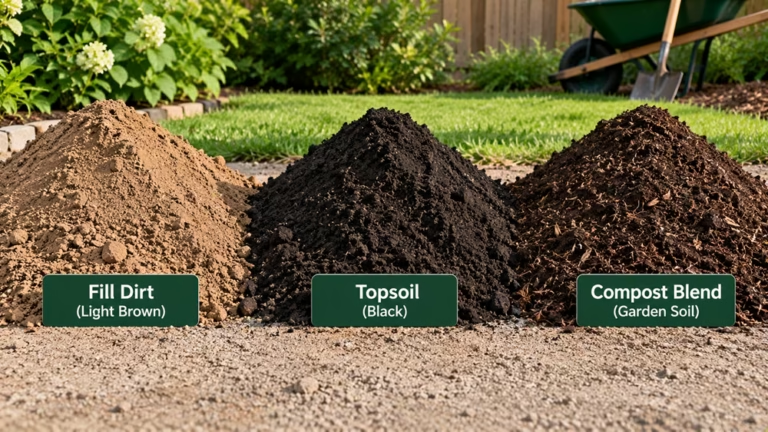 Soil, Mulch & LawnTopsoil vs Garden Soil vs Fill Dirt: Which Soil to Use WhereThe short answer: fill dirt is subsoil with little organic matter, used to fill holes and raise the…Read the guide →9 min read
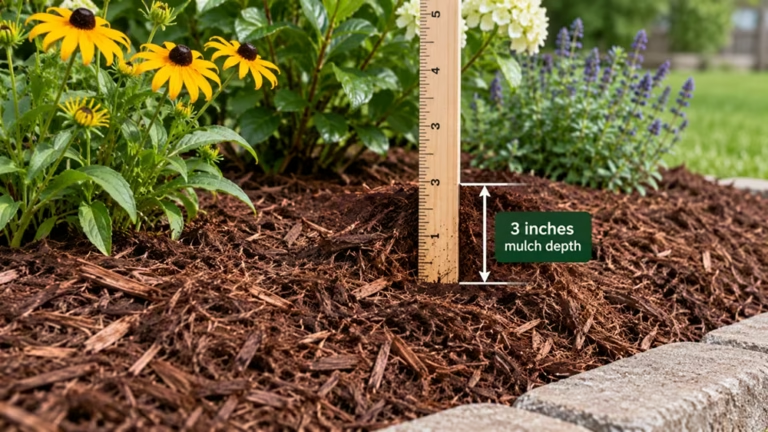 Soil, Mulch & LawnHow Deep Should Mulch Be? Depth Chart for Beds, Trees and GardensSpread mulch 2 to 4 inches deep. Fine or shredded mulch works best at 2 to 3 in,…Read the guide →11 min read
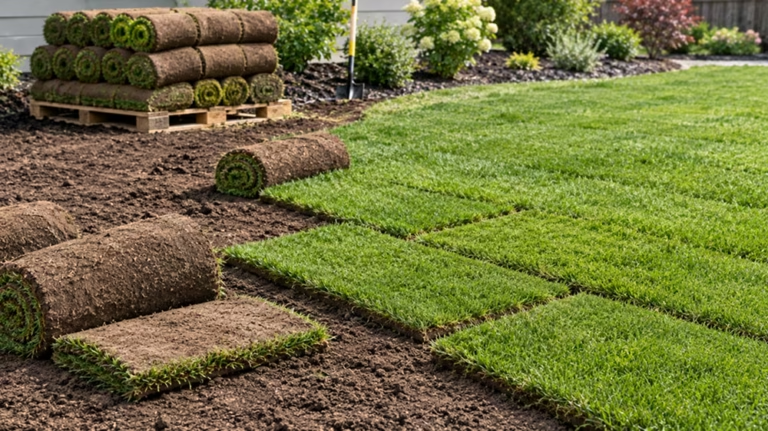 Soil, Mulch & LawnBest Time to Lay Sod: By Season, Region and Grass TypeThe best time to lay sod depends on your grass. Cool-season grasses such as tall fescue and Kentucky…Read the guide →10 min read