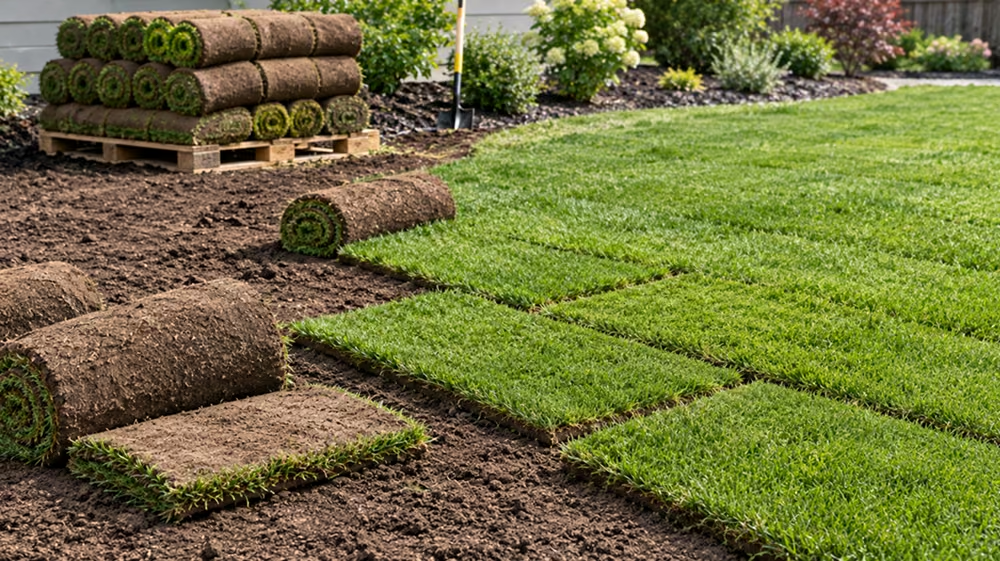
The best time to lay sod depends on your grass. Cool-season grasses such as tall fescue and Kentucky bluegrass do best when laid in early fall, with spring as the second-best time. Warm-season grasses such as Bermuda, zoysia and St. Augustine do best in late spring to early summer, once the soil has warmed and the grass is actively growing.
You can lay sod almost any time the ground isn’t frozen, as long as you can keep it watered. But laying it when the grass is actively growing means the roots knit into the soil in a couple of weeks, instead of struggling through heat or cold. This guide covers the best months by region and grass type, how to prepare the soil, and how to water and care for new sod.
Best time to lay sod by grass type
| Grass type | Examples | Best time | Second-best time | Avoid |
|---|---|---|---|---|
| Cool-season | Tall fescue, Kentucky bluegrass, perennial ryegrass, fine fescue | Early fall (late August to October in most areas) | Spring (April to May) | Peak summer heat and frozen ground |
| Warm-season | Bermuda, zoysia, St. Augustine, centipede, bahia | Late spring to early summer (April to July in most areas) | Midsummer, with extra watering | Late fall and winter, when the grass is dormant |
A good rule of thumb is to lay sod when the grass would be growing fastest on its own. Cool-season roots grow best when the soil is about 50 to 65°F, and warm-season roots grow best once the soil is above about 65°F.
Best time to lay sod by region
| Region | Common grasses | Best time to lay sod |
|---|---|---|
| North (Midwest, Northeast, Pacific Northwest, including New Jersey) | Kentucky bluegrass, tall fescue, ryegrass | Late August to early October. Spring after the ground thaws is next best. |
| Transition zone (Virginia, North Carolina, Tennessee, Missouri, Kansas) | Tall fescue, zoysia, Bermuda | Fescue in early fall. Zoysia and Bermuda in late spring to early summer. |
| South (Georgia, the Carolinas’ coast, Alabama, Texas, Gulf states) | Bermuda, zoysia, St. Augustine, centipede | April through July. Fescue in the cooler hills of north Georgia goes in early fall. |
| Florida and the Gulf Coast | St. Augustine, zoysia, bahia, Bermuda | Possible year-round, best from spring through early summer |
| Desert Southwest (Arizona, Nevada) | Bermuda | Late spring to early summer, with heavy watering in the heat |
Your local extension office can tell you the best dates for your area and which grasses grow best there.
Laying sod in each season
Fall
Early fall is the best time for cool-season sod. The soil is still warm, so roots grow quickly, while cooler air means less heat stress and less watering. Lay it at least 4 to 6 weeks before the ground freezes so the roots can anchor before winter. Fall is a poor time for warm-season sod, which is slowing down for its winter dormancy.
Spring
Spring works for both types. For cool-season grass, lay it early enough that the roots grow before summer heat arrives. For warm-season grass, wait until after the last frost, once lawns in your area have fully greened up.
Summer
Early summer is the best time for warm-season sod. Cool-season sod can be laid in summer, but it’s under heat stress and needs a lot more water. In any summer install, lay the sod in the cool of the morning and water it right away.
Can you lay sod in winter?
Yes, if the ground isn’t frozen, but it’s not ideal. Dormant sod roots slowly, so it stays loose until spring, and frozen or soggy soil makes prep hard. In mild areas such as Florida and south Texas, dormant warm-season sod can be laid in winter and will root when the weather warms. Never lay sod on frozen ground.
How to prepare the ground for sod
Good soil prep matters more than the date you lay the sod. Sod laid on hard, rocky or uneven soil won’t root well in any season.
- Remove the old grass and weeds. Use a sod cutter, which you can rent, or a flat spade. Don’t lay new sod over old grass, because the old grass dies underneath and keeps the new roots from reaching the soil.
- Test the soil. A soil test shows the pH and nutrients, so you know what to add.
- Loosen the soil 4 to 6 inches deep. Till or dig to break up compacted ground, and remove rocks and roots.
- Add topsoil or compost if needed. Poor or thin soil benefits from 2 to 4 inches of good topsoil mixed into the top layer.
- Grade and rake smooth. Slope the soil away from the house, fill low spots, and leave the surface about ½ to 1 inch below sidewalks and driveways so the sod sits flush.
- Firm the soil and add starter fertilizer. Roll the soil lightly so footprints are shallow, and apply a starter fertilizer as the label directs.
- Dampen the soil. Water lightly the day before or the morning of installation. Moist soil helps new roots grow, but don’t lay sod on mud.
The topsoil calculator works out how many cubic yards of topsoil to order for a new lawn.
How to lay sod
- Lay it the day it arrives. Sod stacked on a pallet heats up quickly. Plan to lay it within about 24 hours, sooner in hot weather. Keep the pallet in the shade until you use it.
- Start along a straight edge, such as a driveway or sidewalk.
- Stagger the seams like bricks, so the ends of pieces don’t line up row to row.
- Butt the edges tight without stretching or overlapping the pieces. Gaps dry out and turn brown.
- Cut pieces with a sharp knife to fit around curves, trees and beds.
- On slopes, lay the rows across the slope and hold steep pieces in place with sod staples or stakes.
- Roll the finished lawn with a lawn roller about one-third to half full of water. This presses the roots into the soil and removes air pockets.
- Water within 30 minutes of laying each section, and don’t wait until the whole lawn is done.
Watering new sod
New sod has short roots and dries out fast, so watering is the most important part of the first few weeks. For the first watering, soak it until the soil 3 to 4 inches below the sod is wet. Lift a corner to check.
| Time after laying | How to water |
|---|---|
| Week 1 | Keep the sod and the soil under it moist at all times. In hot weather that can mean watering 2 to 3 times a day in short sessions. In cool fall weather, once a day is often enough. |
| Week 2 | Water about once a day, a little longer each time, to push the roots deeper. |
| Weeks 3 and 4 | Water every 2 to 3 days, soaking deeper each time. |
| After about 4 weeks | Switch to a normal schedule of about 1 inch of water a week, including rain. |
Water early in the morning, when less water is lost to heat and wind. Adjust for your weather: sod laid in fall or cool spring weather needs much less water than sod laid in July, and too much water can rot the roots. The edges and the areas near sidewalks and driveways dry out first, so check them often.
How long does it take for sod to take hold?
In the growing season, new sod usually forms short roots in about 10 to 14 days. Test it by gently tugging a corner. If it resists, the roots are growing into the soil. Deeper roots take about 4 to 6 weeks, when the lawn is ready for normal use. Sod laid in cool weather or near dormancy takes longer.
Caring for new sod
- Stay off it for the first 2 weeks, and keep heavy use and pets off for 4 to 6 weeks.
- Mow for the first time once the sod has rooted, usually after 2 to 3 weeks. Use the highest setting and never remove more than one-third of the blade. Let the soil dry for a day first so the mower doesn’t leave ruts.
- Fertilize about 4 to 6 weeks after laying, using a fertilizer suited to your grass type.
- Pull weeds by hand at first. Most weed killers aren’t safe on new sod until it’s well rooted, so check the label for when they can be used on new lawns.
- Watch for yellow or brown sod. It usually means too little water, especially at seams and edges, or sod that sat on the pallet too long. Constantly soggy soil can also turn sod yellow.
How much sod do you need? A worked example
Say you’re sodding a 50 × 30 ft lawn with 16 × 24 inch slabs:
- Lawn area: 50 × 30 = 1,500 sq ft
- Add 5% for cutting and fitting: 1,500 × 1.05 = 1,575 sq ft to order
- Each 16 × 24 inch slab covers 2.67 sq ft: 1,575 ÷ 2.67 = 591 pieces
- At 450 sq ft per pallet: 1,575 ÷ 450 = 3.5, so order 4 pallets
With 2 × 5 ft rolls (10 sq ft each), the same lawn needs 158 rolls. These are the default numbers in our sod calculator, which also handles L-shaped and round areas and adds up the cost with your supplier’s price per square foot, piece or pallet.
Sod sizes
| Piece | Size | Covers |
|---|---|---|
| Small slab | 16 × 24 in | 2.67 sq ft |
| Large slab | 18 × 24 in | 3 sq ft |
| Roll | 2 × 5 ft | 10 sq ft |
| Pallet | Varies by farm | About 400 to 500 sq ft |
Sod is usually cut with about ½ to 1 inch of soil attached. Sizes vary by sod farm, so ask your supplier how much area each piece and pallet covers.
Sod vs seed: which should you choose?
| Sod | Grass seed | |
|---|---|---|
| Time to a usable lawn | About 2 to 6 weeks | About 2 to 3 months or more |
| Planting window | Wide. Most of the growing season. | Narrow. Early fall for cool-season, late spring for warm-season. |
| Cost | Much higher | Much lower |
| Weeds and erosion | Thick from day one, so few weeds and good on slopes | Weeds compete, and seed can wash off slopes |
| Grass choice | Limited to what local farms grow | Wide choice of blends |
| Labor | Heavy lifting, but done in a day | Light work, but weeks of careful watering |
Sod is best when you want a finished lawn fast, need to stop erosion, or are working on a slope. Seed makes sense for large areas on a tighter budget, if you can wait. The grass seed calculator shows how many pounds of seed you’d need instead.
Planting trees or shrubs around a new lawn? Our guide to how deep mulch should be covers the right depth for beds and tree rings, and how to keep mulch off the trunk.
Starting from seed instead of sod? Our guide to the best time to plant grass seed covers seeding windows, soil temperatures and germination times by grass type.
Frequently asked questions
What month is best to lay sod?
September is often best for cool-season sod in northern states, and May or June for warm-season sod in southern states. The exact month depends on your local climate and grass type.
Can you lay sod in the fall?
Yes. Early fall is the best time to lay cool-season sod such as fescue and bluegrass. Lay it at least 4 to 6 weeks before the ground freezes. Warm-season sod is better laid in late spring or early summer.
Can you lay sod over existing grass?
It’s not recommended. The old grass dies under the new sod and leaves a layer that keeps the new roots from reaching the soil, which leads to patchy, shallow-rooted grass. Remove the old grass first.
How long can sod sit on a pallet?
Lay it within about 24 hours of delivery, and sooner in hot weather. Sod stacked on a pallet heats up and starts to yellow. Keep it in the shade and lay it as fast as you can.
How often should you water new sod in the fall?
Usually about once a day for the first week, then less often as the roots grow. Cooler temperatures mean the sod dries out much more slowly than in summer, so check the soil under the sod and water only when it starts to dry.
What is the best time to lay St. Augustine sod?
Late spring through early summer, once the soil is warm and the grass is actively growing. In Florida and along the Gulf Coast, St. Augustine can be laid almost year-round, but spring and early summer give the fastest rooting.
Timing and watering in this guide are general ranges for planning. Your local climate, soil and grass type all make a difference, so check with your sod supplier or local extension office for advice for your area.
Keep reading
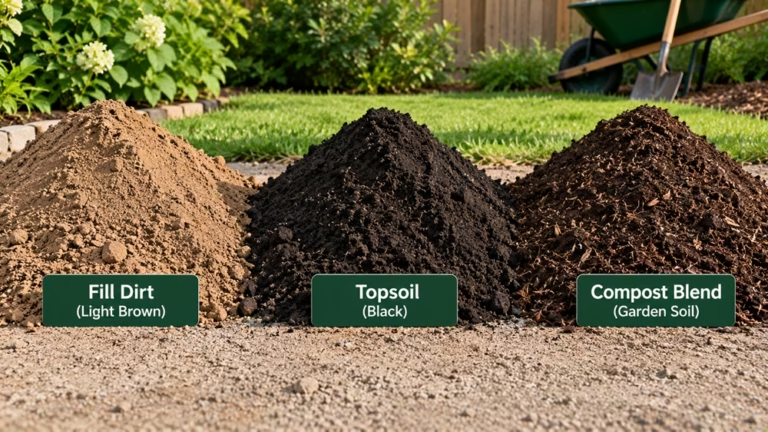 Soil, Mulch & LawnTopsoil vs Garden Soil vs Fill Dirt: Which Soil to Use WhereThe short answer: fill dirt is subsoil with little organic matter, used to fill holes and raise the…Read the guide →9 min read
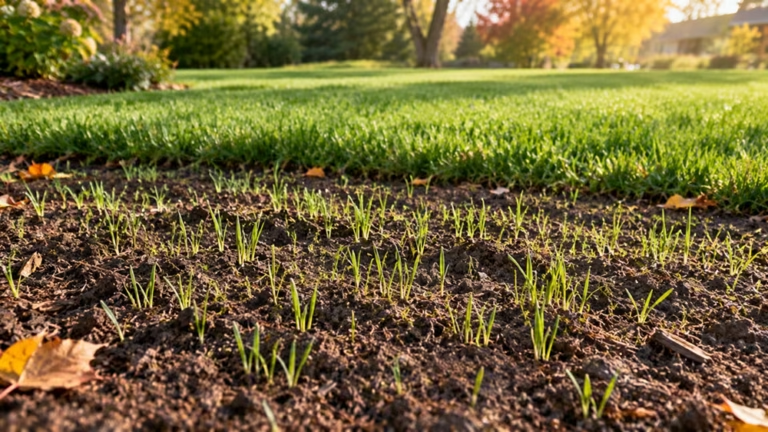 Soil, Mulch & LawnBest Time to Plant Grass Seed (and When to Overseed)The best time to plant grass seed depends on your grass type. For cool-season grasses such as tall…Read the guide →9 min read
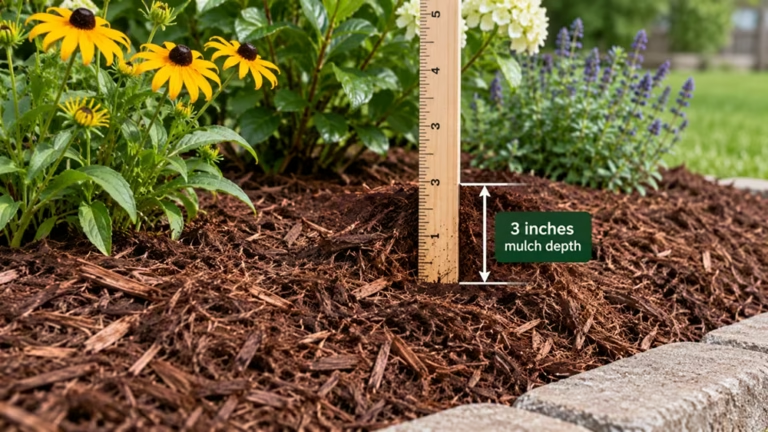 Soil, Mulch & LawnHow Deep Should Mulch Be? Depth Chart for Beds, Trees and GardensSpread mulch 2 to 4 inches deep. Fine or shredded mulch works best at 2 to 3 in,…Read the guide →11 min read