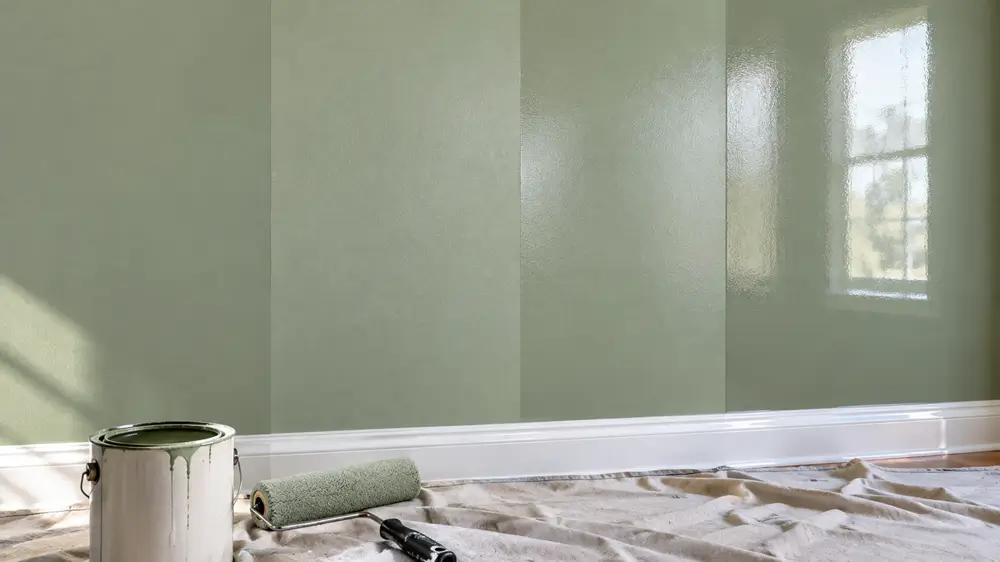
Paint sheen is how shiny the dried paint looks. From least to most shiny, the common sheens are flat, matte, eggshell, satin, semi-gloss and gloss. The shinier the paint, the tougher and easier to wash it is, but the more it shows dents, patches and roller marks. As a quick guide: flat for ceilings, matte or eggshell for living rooms and bedrooms, satin for kitchens, bathrooms, hallways and kids’ rooms, and semi-gloss for trim, doors and cabinets.
This guide has a paint sheen chart, explains each sheen, compares eggshell vs satin, satin vs semi-gloss and flat vs matte, and gives the best sheen for each room. To work out how much wall, ceiling and trim paint you need, use the paint calculator.
Paint sheen chart
Paint makers name their sheens differently, so one brand’s satin can look like another’s eggshell. The Master Painters Institute (MPI) gloss levels give a common scale, measured with a gloss meter at a 60° angle:
| Sheen | MPI gloss level | Gloss at 60° | Look | Washability |
|---|---|---|---|---|
| Flat | 1 | Up to 5 | No shine at all | Lowest |
| Matte / velvet | 2 | Up to 10 | Soft, almost no shine | Low to fair |
| Eggshell | 3 | 10–25 | Faint glow, like an eggshell | Good |
| Satin / pearl | 4 | 20–35 | Soft, pearl-like shine | Very good |
| Semi-gloss | 5 | 35–70 | Clearly shiny | Excellent |
| Gloss | 6 | 70–85 | Bright, reflective | Excellent |
| High gloss | 7 | Over 85 | Mirror-like | Excellent |
Ranges overlap, and a product’s data sheet shows its actual gloss reading. Paint makers that follow the MPI scale explain it in more detail, for example Rodda Paint’s guide to gloss levels. Names like velvet, pearl, low-lustre and low-sheen are brand terms that fall between the main sheens.
Each paint sheen explained
Flat
Flat paint reflects almost no light, so it hides small dents, patched nail holes and uneven drywall better than any other sheen. It touches up well, because a dab of fresh paint blends in. The trade-off is that it marks and scuffs easily and doesn’t stand up to scrubbing. It is the standard choice for ceilings and works on walls in low-traffic rooms.
Matte
Matte has a touch more sheen than flat. Many modern matte paints are made to be washable, so they give the low-shine look of flat with better resistance to marks. Matte is popular for living rooms, dining rooms and bedrooms.
Eggshell
Eggshell has a faint glow when light hits the wall at an angle. It is easier to wipe clean than flat or matte and still hides most wall flaws, which is why many people call it the best all-round sheen for walls in living areas, bedrooms and hallways.
Satin
Satin has a soft, pearl-like shine and stands up well to wiping and moisture. It is a good choice for kitchens, bathrooms, kids’ rooms, hallways and family rooms. It shows roller marks and wall flaws more than eggshell, and touch-ups can stand out.
Semi-gloss
Semi-gloss is clearly shiny, hard and very easy to clean. It is the usual sheen for trim, baseboards, doors, window frames and cabinets, and it works on bathroom walls. On large walls it shows every bump and patch, so the wall needs to be smooth.
Gloss and high gloss
Gloss and high gloss are the hardest and most reflective sheens. They suit doors, trim, cabinets, furniture and accents where you want a bold, lacquer-like look. They need very careful prep, because every flaw shows.
Best paint sheen by room
| Surface | Best sheen | Why |
|---|---|---|
| Ceilings | Flat | Hides flaws and doesn’t reflect light from lamps and windows |
| Living and dining rooms | Matte or eggshell | Low shine with some washability |
| Bedrooms | Flat, matte or eggshell | Low traffic; low shine looks calm |
| Hallways, kids’ rooms, mudrooms | Eggshell or satin | Stands up to hands, bags and scuffs |
| Kitchens | Satin or semi-gloss | Wipes clean of grease and splashes |
| Bathrooms | Satin or semi-gloss | Resists moisture and mildew better |
| Trim, doors, baseboards | Semi-gloss or gloss | Hard, washable and crisp next to walls |
| Cabinets | Satin or semi-gloss | Durable and easy to clean |
| Exterior siding | Flat or satin | Flat hides flaws; satin sheds dirt better |
| Exterior trim, doors, shutters | Semi-gloss or gloss | Durable and stands out from the siding |
Common sheen comparisons
Eggshell vs satin
Satin is a step shinier and a step tougher than eggshell. Choose eggshell for living rooms, bedrooms and walls with small flaws; choose satin for kitchens, bathrooms, hallways and kids’ rooms where you wipe the walls more often. On a smooth wall the difference is subtle, so look at a sample in your own light before you decide.
Satin vs semi-gloss
Semi-gloss is noticeably shinier and harder than satin. Satin is the better choice for most walls, including bathrooms and kitchens, because it shows less texture and fewer flaws. Semi-gloss is better for trim, doors and cabinets, and for bathroom walls that get heavy steam and frequent cleaning.
Flat vs matte
Flat has the least shine and hides the most, but marks easily. Matte has a slightly higher sheen and is usually more washable. For ceilings and walls that rarely get touched, flat is fine; for walls in lived-in rooms, a washable matte is the safer pick.
Eggshell vs flat
Eggshell wipes clean much better than flat but shows a little more of the wall’s texture. Flat is best for ceilings and low-traffic rooms; eggshell is best where walls get touched.
Best paint finish for bathrooms
Use satin or semi-gloss in bathrooms. Shinier paint dries to a tighter film that resists moisture, stains and mildew better and can be wiped down. Semi-gloss is the toughest for small bathrooms with heavy shower steam; satin looks softer on larger walls and still holds up well. Many paint lines sell bathroom formulas with mildew-resistant additives, which help in damp rooms. No paint fixes poor ventilation, so run the bathroom fan during and after showers.
Satin or flat for exterior paint?
Both work on siding. Flat and low-sheen paints hide uneven boards, dents and old repairs, which makes them a good fit for older houses, stucco and rough wood. Satin sheds dirt and water better and is easier to wash, so it suits smooth siding and newer homes. For exterior trim, doors and shutters, semi-gloss or gloss is standard because it is durable and makes the trim stand out.
Tips for choosing and using paint sheens
- Prep matters more as sheen goes up. Shiny paint shows every seam and patch, so smooth the drywall before using satin or semi-gloss. If you are hanging new drywall, see which drywall thickness to use.
- Touch-ups are easiest with flat. On satin and semi-gloss, touched-up spots can look shinier than the rest, so repaint a whole wall section when you can.
- Stay with one sheen per surface. Mixing sheens on one wall looks patchy in raking light.
- Going from glossy to flat needs prep. Lightly sand or degloss shiny paint and prime before you paint over it, or the new coat may not stick well.
- Test a sample. Paint a large swatch and look at it in morning and evening light; sheen looks different under different lights.
Worked example: paint for a 14 × 12 ft room
The paint calculator starts with a 14 × 12 ft room with 8-ft walls, one door and two windows, two coats, and paint that covers 350 sq ft per gallon. A typical sheen plan for this room is eggshell walls, a flat ceiling and semi-gloss trim:
| Surface | Sheen | Area | Paint needed | Buy |
|---|---|---|---|---|
| Walls | Eggshell | 365 sq ft | 2.09 gallons | 2 gallons + 1 quart |
| Ceiling | Flat | 168 sq ft | 0.96 gallons | 1 gallon |
| Trim | Semi-gloss | 101 ft of trim | 0.19 gallons | 1 quart |
For the walls: 365 sq ft × 2 coats ÷ 350 sq ft per gallon = 2.09 gallons. Sheen doesn’t change the amount much, but coverage varies by product, so enter the coverage printed on your can. Because each sheen is a separate product, buy each one for its own surface.
Frequently asked questions
What are the paint sheens from least to most shiny?
Flat, matte, eggshell, satin, semi-gloss, gloss and high gloss. Some brands add in-between names such as velvet, pearl or low-lustre.
What is the best paint sheen for walls?
Eggshell is the most popular all-round choice for walls in living areas and bedrooms. Use matte or flat for a lower shine in low-traffic rooms, and satin in kitchens, bathrooms, hallways and kids’ rooms.
Is eggshell or satin better?
Satin is more durable and washable; eggshell hides wall flaws better and has less shine. Pick eggshell for living rooms and bedrooms, and satin for rooms where walls get wiped often.
What is the difference between satin and semi-gloss?
Semi-gloss is shinier and harder than satin and is the usual choice for trim, doors and cabinets. Satin has a softer shine that suits walls, including kitchens and bathrooms.
Is flat or matte paint better?
Matte is usually better for walls because it is more washable while still looking low-shine. Flat hides flaws best and is the standard for ceilings.
What paint finish is best for a bathroom?
Satin or semi-gloss. Both resist moisture and mildew and can be wiped clean; semi-gloss is the toughest for small, steamy bathrooms.
What sheen should trim and doors be?
Semi-gloss is the standard for trim, baseboards and interior doors, and gloss gives a bolder, more durable finish. Both are easy to clean and stand out against flat or eggshell walls.
What sheen should a ceiling be?
Flat. It hides flaws and doesn’t reflect light from lamps and windows. In bathrooms and kitchens, some people use a matte or satin ceiling paint that resists moisture better.
Should exterior paint be satin or flat?
Flat or low-sheen hides flaws on older or rough siding, while satin sheds dirt and is easier to wash on smooth siding. Use semi-gloss or gloss on exterior trim and doors.
Sheen names and gloss levels vary by brand, so check the product data sheet and test a sample before you buy. Use the paint calculator to work out the wall, ceiling, trim and primer you need for your room.
Keep reading
 Walls, Ceilings & LightingDrywall Thickness: Which Size Goes WhereThe standard drywall thickness for walls is ½ inch, and it is the most common board in homes.…Read the guide →7 min read
 Walls, Ceilings & LightingHow to Insulate an Attic: Step by Step (Blown-In or Batts)To insulate an attic, seal the air leaks in the attic floor first, put baffles at the eaves…Read the guide →10 min read
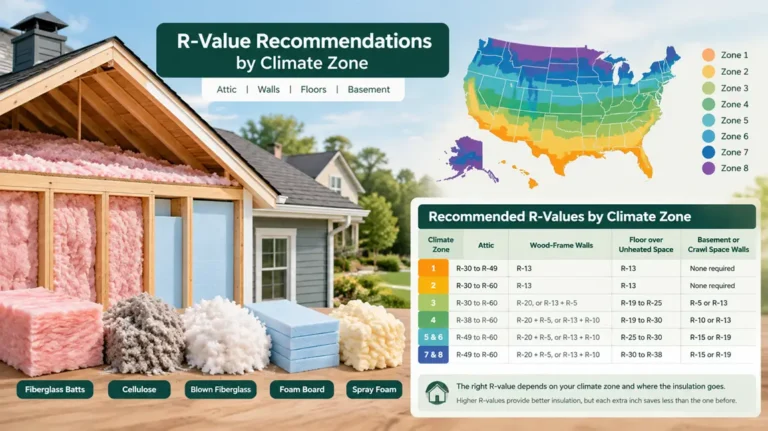 Walls, Ceilings & LightingWhat R-Value Insulation Do I Need? Chart by Climate ZoneThe R-value you need depends on your climate zone and where the insulation goes. As a quick guide…Read the guide →9 min read