Use this blown-in insulation calculator to find how many bags you need to bring your attic up to a target R-value. Choose blown fiberglass or cellulose, enter the attic size and the depth of any insulation already there. You get the bags, the depth to add and an optional cost.
Bag size, extra and cost
Enter the "sq ft per bag" for your R-value to use the maker's figure instead.
Bag counts use typical weights per sq ft from maker coverage charts. Blow at least the number of bags and the depth printed on your bag chart.
How the blown-in insulation calculator works
- Attic area = length × width of the attic floor
- Existing R-value = existing depth × R-value per inch of the old insulation
- R-value to add = target R-value − existing R-value
- Depth to add = R-value to add ÷ R-value per inch (about 2.6 for blown fiberglass and 3.6 for cellulose, after settling)
- Weight = area × R-value to add × weight per sq ft per R, plus 10% for uneven spots
- Bags = weight ÷ bag weight, rounded up. If you enter the coverage from your bag chart, area ÷ that coverage is used instead.
The weights are typical figures from maker coverage charts: about 0.0145 lb per sq ft for each R for blown fiberglass, and 0.0284 lb for cellulose. That gives about 20 bags of fiberglass, or 44 bags of cellulose, per 1,000 sq ft at R-38, close to what bag charts show.
Worked example
A 40 × 25 ft attic with 3 in of old loose fiberglass, topped up to R-49:
- Area: 40 × 25 = 1,000 sq ft
- Existing: 3 in × R-2.5 = about R-7.5, so add R-41.5
- Blown fiberglass: 41.5 ÷ 2.6 = about 16 in more, for about 19 in in total
- Weight: 1,000 × 41.5 × 0.0145 = 602 lb, plus 10% = 662 lb
- Bags: 662 ÷ 28 lb = 23.6, rounded up to 24 bags
- With cellulose instead: about 11.5 in more, 1,296 lb, or 52 bags of 25 lb
- Depth markers: 1,000 ÷ 300 = 4 markers
Depth and bags per 1,000 sq ft
For an empty attic floor, before the 10% extra. Bag charts differ between products, so use your bag’s chart for the final count.
| Target | Fiberglass depth | Fiberglass bags (28 lb) | Cellulose depth | Cellulose bags (25 lb) |
|---|---|---|---|---|
| R-30 | About 11½ in | About 16 | About 8½ in | About 35 |
| R-38 | About 14½ in | About 20 | About 10½ in | About 44 |
| R-49 | About 19 in | About 26 | About 13½ in | About 56 |
| R-60 | About 23 in | About 32 | About 16½ in | About 69 |
Recommended attic R-values
ENERGY STAR guidance for attics with little or no insulation, by IECC climate zone:
| Climate zone | Where (roughly) | Attic R-value |
|---|---|---|
| Zone 1 | South Florida, Hawaii | R-30 to R-49 |
| Zones 2 and 3 | Gulf Coast, the South, Southwest | R-30 to R-60 |
| Zones 4 to 8 | Mid-Atlantic, Midwest, North, Mountain states, Alaska | R-49 to R-60 |
Tips for blowing in attic insulation
- Seal air leaks before you blow. Gaps around light fixtures, pipes, the attic hatch and top plates let warm air escape through any amount of insulation.
- Fit baffles at the eaves so the insulation doesn’t block the soffit vents. The soffit calculator shows how much venting the attic needs.
- Keep insulation away from chimneys, flues and recessed lights that are not rated for contact. Clearances are set by code and the fixture maker.
- Staple depth markers to the framing. Common US code asks for about one every 300 sq ft, facing the attic hatch, and an attic card near the hatch.
- Check what is already up there. Old vermiculite (gray-brown, pebble-like) can contain asbestos, so have it tested before you disturb it.
- Many stores lend the blowing machine free when you buy enough bags. Wear a respirator, goggles and long sleeves.
Frequently asked questions
How many bags of blown-in insulation do I need?
Multiply the attic area by the R-value you need to add, then by the weight per sq ft per R, and divide by the bag weight. For 1,000 sq ft of empty attic at R-38, that is about 20 bags of 28 lb blown fiberglass or about 44 bags of 25 lb cellulose. The chart on your bag gives the exact figure.
How deep should attic insulation be?
It depends on the material and the R-value you want. R-49 is about 19 in of blown fiberglass or about 13½ in of cellulose after settling. Cellulose is denser, so it needs less depth for the same R-value.
Is blown fiberglass or cellulose better?
Both work well in attics. Cellulose gives more R-value per inch and blocks air a little better, but it is heavier. Fiberglass is lighter, doesn’t absorb water and settles less. Price and what your store stocks often decide it.
Can I blow new insulation over old insulation?
Yes, as long as the old insulation is dry and clean, with no mold, pests or vermiculite. Count its depth in the calculator so you only add what is needed. Remove anything wet or damaged first.
How much does blown-in insulation cost?
It depends on the material, the depth and labor where you live, and prices vary a lot by region. Enter your price per bag and the machine rental for a DIY job, or a contractor’s price per square foot, to get a total.
Results are estimates for planning. Bag weights and coverage vary by product, so follow the coverage chart on your bag. See How We Calculate for the formulas we use.
Guides for this project
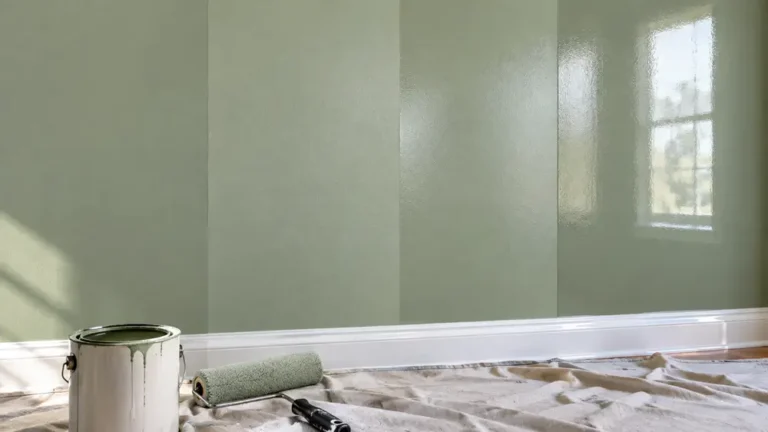 Walls, Ceilings & LightingPaint Sheens Explained: Flat, Eggshell, Satin, Semi-GlossPaint sheen is how shiny the dried paint looks. From least to most shiny, the common sheens are…Read the guide →8 min read
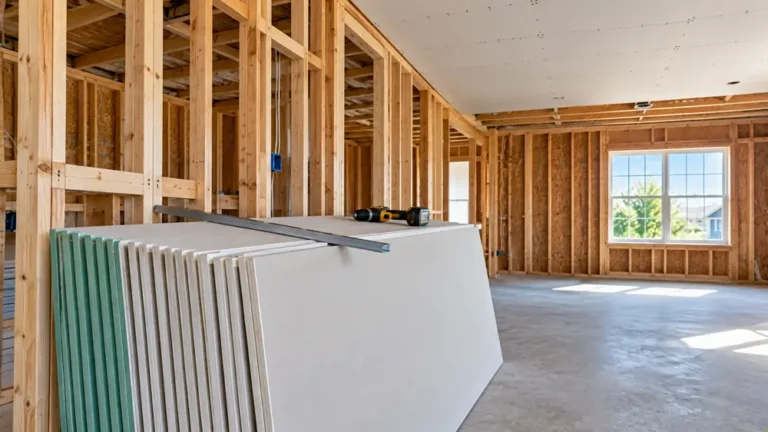 Walls, Ceilings & LightingDrywall Thickness: Which Size Goes WhereThe standard drywall thickness for walls is ½ inch, and it is the most common board in homes.…Read the guide →7 min read
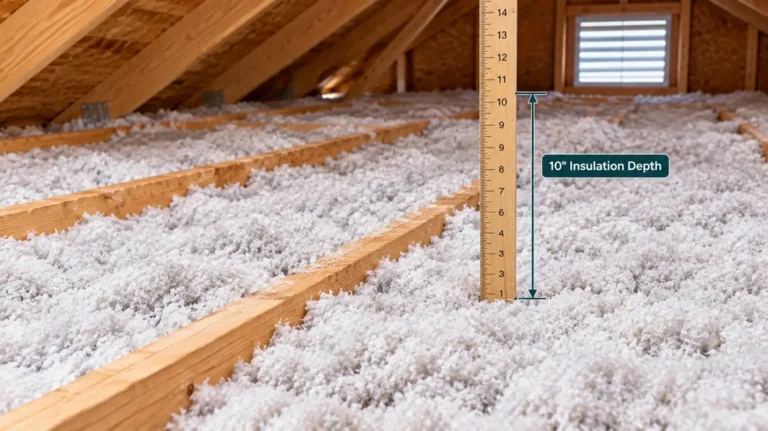 Walls, Ceilings & LightingHow to Insulate an Attic: Step by Step (Blown-In or Batts)To insulate an attic, seal the air leaks in the attic floor first, put baffles at the eaves…Read the guide →10 min read